Leading with Trust

3 Leadership Lessons from Market Basket CEO Artie Demoulas

demoulasIf your employees felt you were fired unfairly, would they walk off the job in support of you? Would they stage protests and rallies for weeks on end calling for your reinstatement? Would your customers choose to take their business elsewhere to show support to those employees and their cause?

That is what has transpired in the Northeast U.S. over the last six weeks and it provides remarkable lessons for leaders everywhere.

First, a little background. Arthur T. Demoulas (Artie) was fired as CEO of the Market Basket supermarket chain in June by a board of directors controlled by his cousin, Arthur S. Demoulas, in a classic power struggle of a family owned business. Employees staged protests, warehouse workers and drivers refused to deliver food to the chain’s stores in Massachusetts, New Hampshire, and Maine, and the company lost tens of millions in revenue as loyal customers took their business elsewhere. Customers showed their support by going as far as taping their grocery receipts from competing stores to the windows of their local Market Basket. After weeks of negotiations, Artie Demoulas reached agreement to purchase controlling interest in Market Basket and was reinstated as CEO.

As I’ve read various news articles and commentaries on this situation, three important leadership lessons have emerged:

1. A little caring goes a long way – Artie Demoulas has created a unique emotional bond with Market Basket employees that fosters intense loyalty. He is well-known for remembering names and birthdays, checking on the status of ill employees, inquiring about spouses and kids, and attending the funerals of employees. “He’ll walk into a warehouse and will stop and talk to everyone because he’s genuinely concerned about them,” said Joe Schmidt, a store operations supervisor. “He cares about families, he asks about your career goals, he will walk up to part-timers and ask them about themselves. To him, that cashier and that bagger are just important as the supervisors and the store management team.” People want to feel valued at work as more than just workers showing up to do a job. Make the effort to get to know your people on a personal level and you’ll see the rewards of trust and loyalty.

2. Business doesn’t have to pursue profits at the expense of people – Last year Market Basket generated $4.6 billion in revenue and has doubled their profitability since 2008, making it the country’s 127th biggest company despite being a regional chain that operates in only three states. The company pays its clerks starting salaries $4 above minimum wage and full-time employees earn 15% profit-sharing bonuses, all the while Market Basket’s prices are 22% lower on average than their closest competitor. “If there’s anything people should take from this, it’s that America is hungry for this kind of success story where everybody wins: the customers, the employees, and the people who run the show,” said Shawn Dwyer, a manager at the Burlington Market Basket store. Profits don’t have to come at the expense of people. Good leaders value results and people.

3. Work has a higher calling and purpose beyond a paycheck –  In his return speech to employees, Artie beautifully expressed this concept.

The workplace here at Market Basket is so much more than just a job.

You have demonstrated that everyone here has a purpose. You have demonstrated that everyone has meaning and no one person is better or more important than another, and no one person holds a position of privilege.

I have always believed that we are born into this world and at a certain place to be with certain people for a reason and a purpose. Everyone has a destiny, and because of you, I stand here with a renewed vigor and a sense of purpose. May we always remember this past summer first as a time where our collective values of loyalty and courage and kindness for one another really prevailed. And, in that process, we just happened to save our company.

You all have demonstrated to the world that it is a person’s moral obligation and social responsibility to protect the culture which provides an honorable and dignified place in which to work.

Leadership doesn’t have to be that complicated: provide a good work environment, take pride in your work, care about people as individuals and not just workers, and serve your customers well. It seems as though Artie Demoulas and the Market Basket employees have found a formula that works and it offers valuable lessons for leaders everywhere.

3 Leadership Lessons from LeBron James’ Return to Cleveland

LeBron James

Over the last few weeks, fans of the NBA, and sports fans in general, have been eagerly awaiting the news of where LeBron James will be playing basketball next season. He chose to opt-out of his contract with the Miami Heat at the conclusion of this past season, and speculation has run rampant about whether he would stay in Miami or return to the Cleveland Cavaliers where he began his career 11 years ago, drafted #1 into the NBA as a 19 year-old kid just out of high school. Unless you’ve been living under a rock the last few days, you know the decision: LeBron is going home to Cleveland.

James’ decision to return to Cleveland, presumably where he will finish his career, presents some interesting leadership lessons:

1. Move from success to significance – LeBron James left Cleveland 4 years ago in pursuit of success and he found it in Miami, winning 2 NBA titles and 2 league MVP’s. Despite that success, something was missing: significance. In his book, Halftime: Moving From Success to Significance, Bob Buford says at some point in life (often around middle age) you will have to transition from the struggle for success to the quest for significance. We spend the first half of our life striving to earn more money, get a better title, or gain more possessions. Despite our success, we begin to question the lasting value of our accomplishments and our desires turn toward wanting to leave a lasting legacy. James recognizes this is his opportunity for significance. It’s his chance to influence other players, the city, and the state. James said, “My relationship with Northeast Ohio is bigger than basketball. I didn’t realize that four years ago. I do now.” The transition from success to significance also involves the identification of what brings you true joy and happiness. James said it simply about why he is returning to Cleveland: “This is what makes me happy.”

2. Serve others and something greater than yourself – Part of moving from leadership success to significance is realizing leadership is not about you; it’s about the people you influence. LeBron James has grown to realize this truth. He said, “I know that I’m going into a situation with a young team and a new coach. I will be the old head. But I get a thrill out of bringing a group together and helping them reach a place they didn’t know they could go. I see myself as a mentor now and I’m excited to lead some of these talented young guys.” Leadership is more than a job; it’s a calling. It’s a sacred opportunity to help other people grow into their full potential and achieve more than they could on their own. James said, “I feel my calling here goes above basketball. I have a responsibility to lead, in more ways than one, and I take that very seriously.”

3. Leadership wisdom involves learning the lessons of past experiences – When LeBron James decided to leave Cleveland four years ago, he made the announcement in an over-hyped ESPN television special called “The Decision.” He announced that he was “taking his talents” to South Beach to play for the Miami Heat. People in Cleveland burned his jersey in effigy, called him a traitor (and much worse), and the owner of the Cavaliers, Dan Gilbert, wrote a scathing letter to the public where he described James as “narcissistic” and his decision to leave a “cowardly betrayal.” James has learned from his experiences and grown as a person and a leader. “If I had to do it all over again, I’d obviously do things differently,” he said. “These past four years helped raise me into who I am. I became a better player and a better man. Without the experiences I had there (Miami), I wouldn’t be able to do what I’m doing today.” LeBron has also learned that leadership wisdom involves recognizing the mistakes you make and working to repair them. Regarding his relationship with Gilbert he said, “I’ve met with Dan, face-to-face, man-to-man. We’ve talked it out. Everybody makes mistakes. I’ve made mistakes as well. Who am I to hold a grudge?”

LeBron James entered the NBA with ridiculously high expectations, as evidenced by the moniker assigned him: The Chosen One. Being born in Akron, OH, he was Cleveland’s native son, the savior of the franchise, and heir-apparent to Michael Jordan as the world’s greatest basketball player. In spite of the unreal expectations placed on him and the inevitable bumps in the road he’s experienced, James has seemed to grow into a more self-assured leader who has gained clarity on his purpose on and off the court. That’s a worthy goal for leaders everywhere.

Tony Gwynn – 4 Lessons Beyond the Baseball Field

Tony GwynnTony Gwynn passed away today at the young age of 54 after battling salivary gland cancer the last few years. Tony was an inspirational role model to me. It wasn’t so much what he accomplished that inspired me…although his accomplishments are mind boggling…but how he went about it. Tony was always low-key and understated, never self-promoting, yet the consummate professional. I always admired how Tony handled himself, not just as a player, but as a man.

While in high school I followed Tony’s career at San Diego State University, where he was an All-America athlete in both basketball and baseball. I graduated high school in 1984, Tony’s first full season in the majors and the year he helped lead the San Diego Padres to their first World Series appearance. It was a magical time in San Diego and was the beginning of a love affair between Tony and the city. I, like so many other people, grew from childhood to adulthood watching Tony play baseball for the hometown team.

Tony went on to become the premier hitter of his generation and one of the greatest baseball players of all time. As a youth baseball coach for 15 years, Tony was my constant example to the kids of how to play the game the right way. I always told my players that one of the reasons I love the game of baseball is that it teaches so many life lessons. The long season, full of highs and lows, is a metaphor for our experiences in life. Tony taught me a number of lessons that I’ve tried to apply in my work and life:

  • Approach  your work as a craftsman – Tony was a master craftsman when it came to hitting a baseball. It was both an art and science to him and he studied it endlessly. Tony was a pioneer in the use of video to study his own at-bats as well as opposing pitchers. Tony has inspired me to approach my own career as a craftsman. Every day is an opportunity to improve my craft. Tony once said that “You can’t live on what you did yesterday. You have to go out and prove yourself every day.”
  • Show loyalty – Tony spent his entire 20 year career with Padres, a rarity in today’s world of superstar athletes auctioning their services to the highest bidding team. Tony knew what he wanted, where he wanted to live and raise his family, and he placed a higher priority on those goals than simply making a buck. Loyalty breeds trust, and Tony was trusted to always be loyal. He’s called “Mr. Padre” for a reason.
  • Be dedicated – Of course Tony is known as a great hitter, and rightly so. He was so dedicated that he would hit thousands of balls off a tee to hone the mechanics of his swing. But Tony also became a very good outfielder because of his dedicated work habits. He wanted to be known as an excellent defensive player and he worked hard at it, eventually winning five Gold Glove awards. Although he wasn’t blessed with outstanding arm strength or range in the field, Tony made up for it with expert positioning in the field and knowledge of opposing hitters. Tony displayed his dedication by working endless hours, always on a quest to be the best player he could be.
  • Have fun – Tony loved to play. He enjoyed the process of playing baseball, from practice, to the actual game, to post-game film breakdown, it was all fun to Tony. Tony always had a smile on his face and a laugh to share. His joyful, positive approach to life was the perfect antidote to a game predicated on failure. Even during his cancer treatments in the last few years of his life, he always had a positive outlook that tomorrow would be a brighter day

Tony was elected to the baseball Hall of Fame in 2007, an honor worthy of being this generation’s greatest batsman. Today, Tony joined the eternal hall of fame, an honor worthy of a man who lived his life as a positive role model to me and so many others.

Fail Your Way to Success – 4 Tips for Going from Zero to Hero

zero-to-heroFifty years ago this week, Jim Ryun failed his way to success when he became the first high school track athlete to run a sub-4 minute mile. Ryun decided to try running only after being cut by a church baseball team and his junior high basketball team. Ryun said, “I’m glad those failures were there because I didn’t linger in a sport that I couldn’t do anything in. I failed on to the next thing, until I found something. That was a gift from God to me.”

“I failed on to the next thing, until I found something.”

In reading about Ryun’s story this week, I was struck by his positive point of view about failure. It reminded me of key lessons I’ve learned over the years through my own experience (yeah, I’ve failed a lot!), as well as from John Maxwell’s excellent book on the subject, Failing Forward.

1. Redefine success and failure — Too often our society views success as a win-lose proposition. You know the mindset…if you’re not a winner, you’re a loser. We have distorted definitions of what success and failure mean, and unless you change the way you perceive success and failure, you’ll never feel satisfied with your lot in life. Failures are just life experiences that didn’t turn out the way you intended. Learn the lessons and move on. Don’t obsess over the situation and don’t use absolute language like “I’m never going to succeed,” or “I’m always going to fall short of my goal.” Don’t dwell in self-pity by ruminating on “Why me?,” but instead focus on “What can I learn?”

2. Be purpose driven — It’s easier to recover from failures when you’re living on purpose. Your purpose is your reason for living, the values and beliefs that drive you to be more of the person you want to be. If you aren’t clear on your purpose in life, you’re like a ship without a rudder, your direction controlled by the randomness of the current. When you’re unclear on your purpose, failures seem more catastrophic and debilitating. When failures occur within the context of pursuing your purpose, they become learning moments for growth and maturity. John Maxwell says that, “More than anything else, what keeps a person going in the midst of adversity is having a sense of purpose. It is the fuel that powers persistence.”

3. Persistence pays off — Winston Churchill said, “Success is not final, failure is not fatal; it is the courage to continue that counts.” Woody Allen famously said, “80% of success is showing up.” Both quotes convey the same idea – persistence pays off. Orville Redenbacher (yes, the famous popcorn guy) spent 15 years perfecting the corn hybrid used for his popcorn. He spent another 10 years making his popcorn the best-selling brand in the world. When asked about his philosophy, he said “I’ve followed the classic homespun principles. Never say die. Never be satisfied. Be stubborn. Be persistent. Integrity is a must. Anything worth having is worth striving for with all your might. Does it sound corny? Honestly, that’s all there is to it. There is no magic formula.”

4. Separate you from your performance — Our tendency is to derive our self-worth from our performance. If we succeed, then we’re worthy people. If we fail, we’re losers. The reality is that when it comes to achieving success, many things are out of our control. We can do everything right trying to achieve a goal, and something completely out of our control happens that causes us to fall short. Does that make us a failure? No, it just makes us human. Erma Bombeck, the famous humorist and writer, suffered many failures throughout her life but kept them in perspective. She said, “What you have to tell yourself is, ‘I’m not a failure. I failed at doing something.’ There’s a big difference…Personally and career-wise, it’s been a corduroy road. I’ve buried babies, lost parents, had cancer, and worried over kids. The trick is to put it all in perspective…and that’s what I do for a living.”

Tell yourself, “I’m not a failure. I failed at doing something.” There’s a big difference.

Fear of failure holds us back from taking risks. We paralyze ourselves, stuck in a state of inaction that leads to resignation and dissatisfaction – a zero life. Instead, we can become our own heroes by learning to redefine failure as opportunities for growth. We can discover our purpose and pursue it with persistence, all the while growing in understanding that even when we fail at a certain goal or task, we aren’t failing as a person. That’s what it means to go from being a zero to a hero – learning to fail forward.

Ctrl+Alt+Delete – 3 Steps to Reboot Your Leadership Style

CtrlAltDeleteControl, Alt, Delete…PC users are familiar with the keyboard trifecta used to reboot a locked-up computer. It doesn’t happen as much as back in the day when we used 286x-486x machines running Windows 3.0 or Windows 95 (if you’re under 30 and have no idea what I’m talking about, click here), but occasionally our computers, or specific applications, still get bogged down and the only way to fix the problem is the technological hat trick of Ctrl+Alt+Delete.

Sometimes we need to reboot our leadership style. It’s easy to get comfortable leading in a certain way, and if we’re not careful, we can find our methods are out of date and no longer effective. Our leadership can get stuck in a rut…bogged down…and before you know it, people are no longer responding to us like they use to. If you find yourself in that situation, it’s time to hit Ctrl+Alt+Delete and reboot your approach to leadership.

Ctrl—When you press the control key in conjunction with other keys on the keyboard, you can perform special functions (e.g., Ctrl+Home=move to top of page, Ctrl+End=move to bottom of page, Ctrl+C=copy, Ctrl+V=paste…you’re welcome for the tutorial on keyboard shortcuts). Pressing that key is all about control, and unfortunately, it’s easy to press it a little too much when it comes to our leadership style. Over-controlling leaders have an unhealthy need to be in power so they hold the reins tightly, never letting employees have too much freedom to do their jobs. If that’s you, it’s time to let go of control by empowering and trusting your people to do their jobs. They may not do it exactly the way you would, but if they’re meeting the right standards, let them add their own creative flair to their work. You’ll find they’ll be more engaged in what they do and produce better results.

Alt—Pressing the Alt key allows you to access the alternate function of other pressed keys (e.g., Alt+Tab=switch between current open windows, Alt+F4=close current window). In leadership, there isn’t any one right way to lead; there are many alternate approaches. The key is to flex your leadership style and approach to meet the needs of the situation. If you’re stuck in a rut and what you’re doing isn’t working, choose an alternate approach. Let me suggest a few: trust and empower people rather than trying to control them, listen more and talk less, ask people what they think instead of always telling them the answer, get to know your employees as people and not just workers showing up to do a job, or offer some words of praise for a job well done instead of being so quick to point out mistakes. Any of those would be good places to start.

Delete—Thank heavens for the delete key! If we type or create something we don’t want or like, a little tap of the delete key instantly erases it. The delete key is the final and most critical key to press when rebooting your computer, and the same is true when rebooting our approach to leadership. We have to regularly delete the leadership behaviors no longer serving us. Times change, new generations enter the workforce, the business climate constantly evolves, and it’s imperative for leaders to stay current and relevant. If you frequently find yourself justifying your leadership behaviors by saying thinks like “It’s always worked in the past,” or “I’m used to doing it this way,” then it’s definitely time to reboot your leadership.

It’s easy to get bogged down in the day-to-day grind of leadership and start to lose effectiveness. It’s important to occasionally reboot our approach to leadership by letting go of control, choosing alternate approaches to how we lead, and deleting the behaviors getting in the way of our success.

Do you regularly reboot your leadership? Feel free to leave a comment with your thoughts.

“Get Lost in the Game” – 6 Ways to Perform Your Best

“I told him to get lost in the game.”

That was Kentucky coach John Calipari’s advice to one of his star players, Julius Randle, during half-time of the NCAA Men’s Basketball Championship game this past Monday night. Coming into the game, Randle had been averaging over 15 points and 10 rebounds, yet entering half-time he had scored just 6 points, grabbed 2 rebounds, and was clearly fazed by the pressure-packed environment of the championship contest. Calipari knew his player was out of rhythm, trying too hard to contribute and forcing the action, rather than relaxing and letting the game come to him. Calipari wanted Randle to get lost in the game, to be in the flow.

The flow is the metal state you’re in when you’re fully immersed in an activity that consumes your entire focus, energizes your attention, and produces a deep level of satisfaction and joy through the process. In the groovein the zonewiredin the momenton fire…and my personal favorite, beast mode, are all ways of expressing this condition. It’s when we do our best work and experience the most fulfillment in our activities. It’s also a rare and fleeting circumstance to be in the flow.

How can we be in the flow more often? How can we get “lost in the game?” First, we have to understand the conditions that lead to flow experiences. Second, we have to take steps to create the environment for us to get in the flow.

Conditions for Flow Experiences
There are three basic conditions you need for flow experiences:

  1. A clear goal – This is why you often hear athletes talk about being in the zone or having tunnel focus when it comes to their activities. Whether it’s trying to hit a pitched ball, complete a pass, score a goal, make a last second shot, or cross the finish line ahead of others, there is a clear goal that lends purpose, structure, and process to the task at hand. A lack of clear goals is why we often don’t experience the flow at work. Unclear goals make it difficult to narrow our focus and attention and leaves us feeling stuck or overwhelmed with the work in front of us.
  2. A balance between your skills and the challenge of the task – If you perceive you have the skills to meet the difficulty of the challenge ahead of you, it’s easier to get in the flow. If you believe you’re ill-equipped or don’t have the talent to accomplish the goal, anxiety and stress will prevent you from achieving a flow-state. Conversely, if you believe the goal is not challenging enough given your experience and skills, you’ll encounter boredom or apathy. You need the goal to be challenging enough to capture your attention, while simultaneously having enough skill to give you the confidence that you can tackle the situation.
  3. Real time feedback on your performance – You can feel when you’re in the flow. It’s those occasions where you lose track of time because you’re completely immersed in an activity and things just, well…flow. And when you’re not, you feel like you’re trudging up a muddy hill, taking one step up and sliding back two. Flow is sustained by receiving feedback on your performance. When you see you’re performing well, it increases your confidence and desire to stay in the flow. When you see you’re off course, you can make adjustments to get back on track and in the flow.

How to Increase Flow Experiences
We can take concrete steps to help increase flow experiences at work that will allow us to perform our best. Here are six suggestions:

  1. Connect your work to the bigger picture – Too many of us view our work with a microscope rather than a telescope. A microscope allows you to zoom in on the details of a particular object, ignoring the surrounding area. A telescope, on the other hand, allows you to see long distances away—the big picture. Rather than being uninspired by the small tasks you have to do, connect them to the importance of the big picture. Figure out how your work contributes to the betterment of the world. How does your work help improve the lives of people by meeting their needs or desires? All work has redeeming value and it’s up to us to discover it. Tapping into the bigger picture will add motivation and commitment to your work and help you achieve flow in your activities.
  2. Clarify and prioritize goals – If your goals aren’t clear, work on gaining clarity. Figure out specifically what you’re trying to accomplish, what the standards are, the deadlines to meet, or the deliverables being produced. If you’re challenged with too many goals, work on prioritization. If you have conflicting priorities from multiple stakeholders, you may have to involve your supervisor to help you. Get clear on what you need to accomplish and then apply laser-like focus to your activities.
  3. View work as a game – Games in general, and video games in particular, lend themselves to flow experiences because they are immersive in nature. We get wrapped up in figuring how to reach the new level, unlock the next treasure, or beat the “boss.” You can apply the same principles to your work. Engage your mind in thinking about how can you accomplish things faster, better, or easier. Are there other ways you can approach tasks or activities that may bring more fulfillment? Look at work as a game you’re trying to master and let your creativity run wild.
  4. Seek out bigger challenges and/or improve your skills – Complacency, boredom, and apathy are flow killers. If you find your work lacking in challenge, seek out new ones. Work with your supervisor to see if there are increased responsibilities you can take on, project teams you can join, or other ways to add more challenge in your work. On the flip side, worry, stress, and anxiety are also flow killers. If you find your work is too challenging, explore skill development opportunities. Go back to school, read books, get a mentor, or seek out additional training to boost your confidence and capability to meet the challenges you face.
  5. Find your sweet spot – Your sweet spot is where your skills are matched appropriately to the challenge, and when you find that place, you have the greatest chance of achieving states of flow. Finding your sweet spot might mean following point #4 above, or it might mean transforming how you do your work by changing/improving processes, delegating it to someone, or collaborating with others.
  6. Choose your motivation – Your supervisor is not responsible for motivating you. You, and only you, control your level of motivation. You can choose to be disinterested in your work or feel like others are imposing work on you, or you can choose to shift your motivational outlook by focusing on areas of your work where you can exhibit autonomy in your activities, mastery over how well you do your job, and satisfaction in the relationships you build with others.

Kentucky ended up losing the championship to UConn and Julius Randle never really got into the flow of the game, finishing with just 10 points and 6 rebounds. However, it doesn’t negate the wisdom of Coach Calipari’s advice. We do our best work when we get lost in the game.

Everyday at Work is a Job Interview – 5 Tips for Demonstrating Your Value

Job Interview

The dress code in my office is business casual, but every once in a while I like to wear a tie. You know…look good, feel good…dress for the job you want, not the job you have…all that good stuff. Actually, there are times I just like to dress up for no special reason. But whenever I do, invariably I hear the same wisecrack from one or more team members: “Why are you all dressed up? Got a job interview today?” My response is always the same: “I interview for my job every day!”

Although I say that somewhat jokingly, there is an element of truth I’m trying to reinforce with my team—every day you show up to work is an interview for your job. In today’s economy you have to continually demonstrate to your employer how you’re adding value to the organization. I’m not talking about approaching your job from a state of fear, constantly afraid of being let go if you don’t hit a home run every time you come to bat. I’m talking about having an understanding and appreciation for how you have to “bring it” each day you walk through your company’s front door.

Here are five key principles that will help you increase your value and contribution to your organization:

1. Accept the new reality – My brother Ron had only one job his entire life. He recently retired from a 40+ year career with a national grocery store chain, having been employed by them since he was a 17 year-old high school student. Those days are gone. We live in a new reality of a dynamic, constantly shifting, and evolving global economy. It requires businesses to be agile and shift their strategies to take advantage of new opportunities, create new markets, or ward off upstart competitors. You have to come to grips with the need to constantly stay relevant in your job or profession. Complacency and stagnation makes you vulnerable and less valuable to your organization. If you aren’t adding value, you’re probably expendable.

2. Take charge of your own career development – As employees, all of us should expect our employer to help develop us in our role, but career development should be seen as a privilege, not a right. Organizations have an obligation to provide the right training, tools, and resources to enable employees to maximize their potential in the job they were hired to do. But career development (promotions, moving into new roles, etc.) is a privilege and is not the employer’s responsibility. Is it a smart thing for employers to facilitate career development in order to attract and retain key talent? Absolutely! But it’s up to you to keep learning, to further your education, improve proficiency in your job, and develop new skills in alignment with the direction of your organization’s goals and strategies. No one else except you is responsible for your career development.

3. Have an ownership mentality – How would the value of your contribution be different if you acted like you own the place? Would you be more emotionally invested and passionate about the work you do? Would you produce higher quality products? Would you be a little more prudent or cautious with company expenses? Would you care a little more about the customer experience? People who approach their jobs with an ownership mentality care about these sorts of things. They view themselves as stewards of the company’s resources and work hard to promote the success of the entire organization, not just their particular role, team, or department.

4. Build your brand – Whether you realize it or not, you have a brand image at work. Your brand image is not only how people perceive you (your reputation), but also what differentiates you from everyone else in your company. Tom Peters, the guru of personal branding, says, “If you are going to be a brand, you’ve got to become relentlessly focused on what you do that adds value, what you’re proud of, and most important, what you can shamelessly take credit for.” Forget your job title. What is it about your performance that makes you memorable, distinct, or unique? What’s the “buzz” on you? Forget about your job description too. What accomplishments are you most proud of? How have you gone above, beyond, or outside the scope of your job description to add value to your organization? Those are the elements that make up your brand. Check out this article if you need help developing your brand.

5. Consider yourself an independent contractor – Most of us are governed by at-will employment agreements with our companies. Either party can decide to end the employment relationship at any time for any reason (within certain legal boundaries, of course). You would be well-served to view yourself as an independent contractor in the business of you—You, Inc. You have hired out your services to your employer in exchange for a specific level of compensation. At some point in time, either by your choice or your employer’s, that business arrangement may change or end. In the meantime, focus on building a portfolio of accomplishments you can use to secure business with future clients. See rules 1 and 2 above.

Thinking of yourself in these ways might be new to you. It takes a shift in perspective to view yourself as not just an employee doing a job, but as an independent contractor running your own business. If you make that shift, you’ll realize you have to constantly develop your skill-set (i.e., the services you have to offer), build an attractive brand image, and consistently demonstrate to your client (i.e., employer) how you’re adding value. Remember, you are in the business of YOU!

3 Types of People, Projects, and Tasks Every Leader Needs to Eliminate

Pruning-roses-with-shearsAt this very moment, you have people, projects, or tasks you need to eliminate from your life. Maybe you’ve been dealing with a troubling employee situation for months, or even years, and despite your best efforts you don’t see any hope for improvement. Or maybe it’s a project that got off track months ago, but no one, particularly you, wants to admit it’s a failure and a new strategy is needed. Perhaps it’s a particular task or process you’ve maintained for years because “that’s the way it’s always been done,” but you have an inkling that if you stopped doing it tomorrow, no one would notice or care.

If this resonates with you, then it’s time for some pruning.. The core definition of pruning is to remove anything considered superfluous or undesirable. As Dr. Henry Cloud points out in his book, Necessary Endings, the areas of business and life that require your limited resources—your time, energy, talent, emotions, money—but aren’t achieving the vision you have for them, should be regularly pruned in order to reach their full potential.

Consider the cultivation of a prized rosebush to understand the purpose of pruning. The gardener removes branches or buds that fall into any of three categories:

  1. Healthy buds or branches that are not the best ones,
  2. Sick branches that are not going to get well, and
  3. Dead branches that are taking up space needed for the healthy ones to thrive.

These three categories of pruning apply to the types of people, projects, and tasks you are dealing with right now.

Type 1 – The Good Detracting from the Great

The rosebush produces more growth than the plant can optimally sustain. The plant has only so much life and energy to power its development, so the gardener trims what may be healthy, yet average blooms, so the plant can direct its resources to the best producing roses. The good roses, if left alone, will suck life away from the great roses. The result? A rosebush with average blooms performing below its potential.

What people, projects, or tasks are you involved with that, although good in and of themselves, are taking time and resources away from achieving greatness with your team or organization? There is no shortage of things demanding your attention, so the key is to prune your priorities down to the most essential ones that fuel the majority of your success.

Type 2 – The Sick That Can’t be Cured

Some branches in a rosebush become diseased and have to be removed to protect the health of the entire plant. When the caretaker notices a sick branch, he will spend some time trying to nurse it back to health. At some point in time the caretaker will reach a decision to prune the branch because he realizes that no amount of water, fertilizer, or care is going to heal the branch. Sick branches take energy from the rosebush, and pruning these sick branches allows the bush to direct more energy to the healthy ones.

You have people, projects, and tasks that are diseased and need to be removed. You have fertilized them, watered them, nurtured them, and done everything in your power to help cure them. For whatever reason, they aren’t getting better and they’re only taking time and energy away from the healthy things you need to focus on. This can be one of the toughest decisions a leader has to face. It might mean confronting the difficult truth that a key company initiative isn’t working as intended, or a long-term employee isn’t able to improve his performance to meet the needs of the organization. On the plus side, it is liberating to admit things aren’t working and changes need to be made because it frees up time, energy, and resources to focus on areas of new growth.

Type 3 – The Dead Preventing Growth of the Living

The third type of pruning is removing dead branches in order to make more room for the living branches to grow. If the dead branches aren’t removed, the path of the living branches will be obstructed and limited. The living branches need room to spread in order to reach their full potential and the dead branches impede that growth.

You have dead branches in your business and personal life that need to be removed if you want to reach your full potential. It might be misguided organizational strategies that served your company well ten years ago but are no longer relevant. Or maybe it’s processes, systems, or meetings you engage in but don’t add any value to the purpose you’re trying to achieve. If it’s dead and just taking up space, get rid of it. It’s time to cut that branch.

Prune with a Purpose

The gardener doesn’t prune willy-nilly, just clipping branches and blooms here and there without discretion. The gardener has a purpose. He knows what a healthy rosebush should look like and he prunes toward that standard. It illustrates the importance of having clear goals and expectations for your organization, your people, and yourself. Without clear goals and standards, you don’t have an objective measure by which to prune and you handicap yourself from reaching your full potential.

7 Ways to Make it Easy for People to Work with You

easy“It all depends on who you’re working with.”

That was the feedback from team members to a recent survey about the state of collaboration within our department. The feedback was consistent. Collaboration is…well…inconsistent. It all depends on who you’re working with.

In all organizations you’ll hear people complain about the difficulty of working with certain colleagues. The common refrain is, “If only they would _____…”— communicate better, be more responsive, give me all the information I need…fill in the blank with whatever reason suits the occasion.

Instead of being frustrated with other people not being easy to work with, shift the focus to yourself. Are YOU are easy to work with? If you are easy to do business with, odds are you’ll find others much more willing to cooperate and collaborate with you.

Here are seven ways to make it easy for people to work with you:

1. Build rapport – People want to work with people they like. Are you likable? Do you build rapport with your colleagues? Get to know them personally, engage in small talk (even if it’s not your “thing”), learn about their lives outside of work, and take a genuine interest in them as people, not just a co-worker who’s there to do a job.

2. Be a good communicator – Poor communication is at the root of many workplace conflicts. People who are easy to work with share information openly and timely, keep others informed as projects evolve, talk through out of the box situations rather than make assumptions, and they ask questions if they aren’t sure of the answer. As a general rule, it’s better to over-communicate than under-communicate.

3. Make their job easier – If you want to gain people’s cooperation, make their job easier and they’ll love you for it. But how do you know what makes their job easier? Ask them! If handing off information in a form rather than a chain of emails makes their job easier, then do it. If it helps your colleague to talk over questions on the phone rather than through email, then give them a call. Identify the WIIFM (what’s in it for me) from your colleague’s perspective and it will help you tailor your interactions so both your and their needs are met.

4. Provide the “why” behind your requests – Very few people like being told what to do. They want to understand why something needs to be done so they can make intelligent decisions about the best way to proceed. Simply passing off information and asking someone to “just do it like I said” is rude and condescending. Make sure your colleagues understand the context of your request, why it’s important, and how critical they are to the success of the task/project. Doing so will have them working with you, not against you.

5. Be trustworthy – Above all, be trustworthy. Follow through on your commitments, keep your word, act with integrity, demonstrate competence in your own work, be honest, admit mistakes, and apologize when necessary. Trust is the foundation of any healthy relationship, and if you want to work well with others, it’s imperative you focus on building trust in the relationship. Trust starts with being trustworthy yourself.

6. Don’t hide behind electronic communication – Email and Instant Message have their place in organizations, but they don’t replace more personal means of communication like speaking on the phone or face to face. I’ve seen it time and time again – minor problems escalate into major blowouts because people refuse to get out from behind their desks, walk to their colleague’s office, and discuss a situation face to face. It’s much easier to hide behind the computer and fire off nasty-grams than it is to talk to someone about a problem. Just step away from the computer, please!

7. Consistently follow the process – Process…for some people that’s a dirty word and anathema for how they work. However, processes exist for a reason. Usually they are in place to ensure consistency, quality, efficiency, and productivity. When you follow the process, you show your colleagues you respect the norms and boundaries for how you’ve agreed to work together. If you visited a friend’s home and were asked to remove your shoes at the door, you would do so out of respect, right? You wouldn’t make excuses about it being inconvenient or it not being the way you do things in your house. Why should it be different at work? If you need to fill out a form, then fill it out. If you need to use a certain software system to get your information, then use it. Quit making excuses and do work the way it was designed to be done. Besides, if you consistently follow the process, you’ll experience much more grace from your colleagues for those times you legitimately need to deviate from it.

No one likes to think of him/herself as being difficult to work with, yet from time to time we all make life difficult for our colleagues. Focus on what you can do to be easy to do business with and you’ll find that over time others become easier to work with as well.

Leadership Development Carnival – January 2014

leadership_carnival logo

Welcome to the January 6, 2014 edition of the Leadership Development Carnival! One of the best ways to improve as a leader is to reflect upon your past experiences, catalog the lessons learned, and apply that information to your future leadership activities. Fortunately for you, 28 of the top thought leaders in the field of leadership have assembled their best blog posts for 2013, effectively serving as a world-class library of leadership wisdom for your benefit. Enjoy the best of the best!

Dan McCarthy at Great Leadership – With so many great books on leadership, why are so many people in leadership positions clueless? Dan tells you why in 10 Reasons why Managers are Clueless about Leadership.

Joel Garfinkle at Career Advancement Blog – Joel provides insight on how to build a workforce that wants to stay with you in Six Articles to Fix Your Employee Retention Issue.

Mike Myatt of N2growth Blog – This Forbes article by Mike has been read more than 1 million times for good reason. In order for leaders to keep their best people, they need to know the 10 Reasons Your Top Talent Will Leave You.

Chris EdmondsThe Purposeful Culture Group – My friend and colleague Chris Edmonds shares that employees have The Right to Work Place Inspiration. Top organizations ensure their KPI’s (Key Performance Indicators) align with their WPI’s.

John Hunter at the Curious Cat Management Improvement Blog – In his article, Managers Are Not Non-Leaders: Managers Need to Practice Things We Classify as Leadership Traits, John discusses how management is often demeaned in comparison to leadership and we have much to learn from each discipline.

Chery Gegelman of Giana Consulting’s Simply Understanding Blog – In the first of a three-part series, The Single Best Way to Develop Leaders: Throw Them In!, Chery highlights the personal growth that happens when leaders take on challenging assignments over their heads.

Dana Theus of InPower Consulting – Dana illustrates the bottom-line benefits organizations receive in Activating The Hidden Face of Workforce Diversity.

Linda Fisher Thornton of Leading in Context – There is a trend toward considering our responsibilities broadly, beyond making profits to also making a difference. Here is Linda’s list of 16 Trends Shaping the Future of Ethical Leadership. As we head into the New Year, let’s help our leaders be ready for this positive, proactive, ethical leadership future.

Dr. Anne Perschel of Germane Consulting – In The One Thing Leaders Need to Know, Anne shares that some, but not all, who hold leadership titles are leaders. This post is about those leaders, the ones who are actually leading, which means you are evolving – and so are others.

Jim Taggart’s Changing Winds Blog – In his post The Leader Sets the Tone, Jim discusses the importance of three critical leadership attributes: Integrity, Modeling, and Consistency.

Frank Sonnenberg at Frank Sonnenberg Online – Frank gives the honest, straight-forward truth about balancing success with humility in Be Humble: Don’t Let Success Go to Your Head.

Julie Winkle Giulioni – Despite the ubiquitous use of the term, not all groups are teams. In Team, Group, or Train Wreck, Julie discusses how teams share some essential qualities that distinguish them from other collections of individuals.

Don MaruskaJay Perry of Take Charge of Your Talent – Don and Jay are calling for a revolution in talent development, and in their article, Putting the Keys to Talent Development in Your Hand, they give you a new paradigm for viewing talent development.

Jennifer V. Miller of The People Equation – Jennifer offers an opportunity for women to step up and claim their leadership potential in the post 37 Women with Something Interesting to Say About Leadership. “This post resonated with both men and women. I heard from countless people, thanking me for giving voice to a frustration that has long existed in the blog world as it relates to women and leadership” says Jennifer.

Mike Henry, Sr. of The Lead Change Group – Written by Tal Shnall, Mike shares the post Five Ways to Improve Communication With Your Teams. These five tips will help you become a better leader-communicator in any environment.

Wally Bock’s Three Star Leadership Blog – Brutal honesty is supposed to be a good thing. Gentle honesty is better. In his post Gentle Honesty, Wally reminds leaders that their people should leave a conversation about performance or behavior thinking about what will change, not how they’ve been treated.

Joan Kofodimos from Teleos Consulting’s Anyone Can Lead Blog – In her article Biggest Coaching Mistakes Managers Make, Joan shares 9 of the most common managerial missteps when trying to coach employees.

Mary Ila Ward of Horizon Point Consulting – Mary asks 2 Questions for Striving Servant Leaders in this concise, yet pointed post, that will cause all leaders to stop in their tracks.

Lisa Kohn from Chatworth Consulting’s Thoughtful Leaders Blog – When we hold on to our misfortunes it’s as if we hand over our power to them. We give away our power, and then we feel powerless. In Don’t Give Your Power Away, Lisa shares that we have a choice as to whether or not we allow our misfortunes to have such power over us. We have a choice, as always, about what we focus on, what we notice, what we tell ourselves, and where we put our attention.

Jesse Lyn Stoner’s blog at the Seapoint Center for Collaborative Leadership – My friend and colleague, Jesse Stoner, says “The assumption that change has to start at the top is wrong. Stop waiting for senior leaders to provide leadership. You have the power to provide leadership within your own sphere of influence.” In her excellent article, Stop Waiting for Someone Else to Provide Leadership, Jesse give leaders four important questions to discuss with their teams.

Beth Miller at Executive Velocity – So often leaders don’t take time for themselves by getting good feedback, assessments, and coaching to develop themselves to their true leadership potential. In Leaders: Fight the Gremlins, Beth encourages leaders to make a New Year’s Resolution to create a personal development plan so they can avoid or resolve potential derailing behaviors.

Bill Treasurer of Giant Leap Consulting – In his post Leaders Are All Around Us, Bill shares the important truth that although role models like Steve Jobs can be helpful, we have leaders all around us, more accessible and ready to make a difference.

Steve Roesler of All Things Workplace – Everyone is talented in some way. In Target The Right Audience For Your Talents, Steve Roesler suggests from experience that where you choose to use your talents is key to satisfying you and everyone involved.

Jon Mertz of Thin Difference – Taking a mindful approach to challenging situations and conversations enables us to respond in better ways. In his post A Mindful Difference: Respond vs. React, my friend Jon highlights four steps leaders can take to be more mindful of how they respond to others.

Ted Coiné, Shawn Murphy, Meghan Biro, and Matthew Fritz from the Switch & Shift blog – Ted reminds us that what goes around, comes around in Good Karma is Good Business, while Shawn outlines 9 Leadership Essentials to Cause Meaningful Work. Meghan follows up with 5 Actions That Spark Employee Engagement and Matthew discusses three principles of The Leader’s Greatest Harvest.

Don’t Lead Scared – 6 Tips for Leading Like a Badass

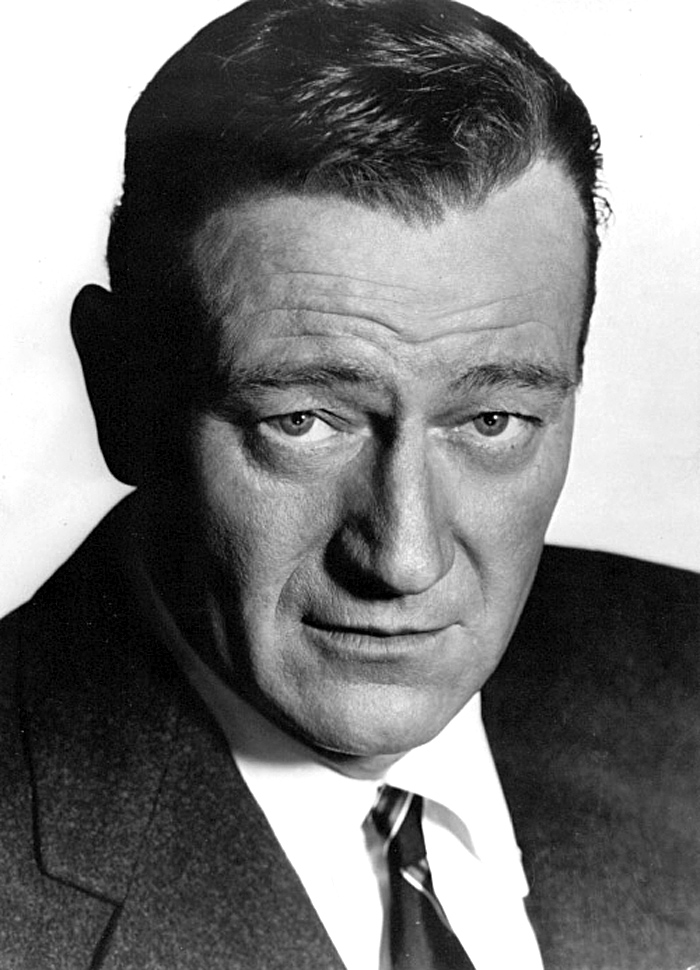
John WayneOne sure way to kill your leadership career is to lead scared.

Leading from a position of fear never brings good results. It causes you to make rash decisions, shrink from opportunities, and needlessly fight the wrong battles.

The opposite of leading scared is leading like a badass. What does a badass leader look like?

He confidently marches to the beat of his own drum, not swayed by popular opinion or the need to please others. He doesn’t put on airs, pretending to be something he isn’t, but stays true to his principles and values in all that he does. He doesn’t have to talk about being a badass (that’s a poser) because he knows he is a badass. A badass leader isn’t an uncooperative jerk, indiscriminately ticking people off. A badass leader knows his limits and takes pride in working with others to achieve the goals of the team. Understated, purposeful, and pursuing excellence in all he does. That’s a badass.

Examples of well-known badasses:

  • Abraham Lincoln – Presidential Badass
  • Condoleezza Rice – Diplomat Badass
  • Derek Jeter – Baseball Badass
  • Leonardo da Vinci – Renaissance Badass
  • Mother Teresa – Spiritual Badass
  • Albert Einstein – Intellectual Badass
  • Aristotle – Philosophical Badass
  • John Wayne – Western Movie Actor Badass

Get the idea? So how do you become a leadership badass? Here’s six ways:

1. Develop your competence – Competence breeds confidence, no two ways about it. If you want to be more secure in your leadership abilities then you need to keep learning and growing. Read books, take classes, get a mentor, and learn from others. Badass leaders aren’t content with the status quo. They are always striving to improve their craft.

2. Be vulnerable – Huh? Isn’t that the opposite of being a badass? No! Leaders that display vulnerability show they don’t have anything to hide. Posers are those who lead with a false sense of confidence, trying to hide their weaknesses from others. Badass leaders are acutely aware of their strengths and weaknesses and aren’t afraid to admit when they don’t know something. People crave authentic leadership and badasses are nothing if not authentic.

3. Focus on building trust – Trust is the foundation of badassery. You have to earn people’s trust before they will follow you and give their all. Badass leaders focus on building trust by being good at what they do, acting with integrity, caring for others, and following through on their commitments.

4. Build up other people – Badass leaders don’t feel the need to build themselves up by tearing down others. Secure enough in their self-worth, badass leaders take pride in the accomplishments of their team members and do everything they can to set them up for success. Badass leaders know that their success comes from the success of their people.

5. Get stuff done – Badass leaders don’t make excuses, they make things happen. They remove obstacles for their people, find the tools and resources they need, and provide the right amounts of direction and support they need to achieve their goals. Badass leaders are about doing, not talking. Badass leaders get stuff done.

6. Go against the grain – Doing what’s right is not always the popular choice, but badass leaders aren’t afraid to go against the grain when it’s the right thing to do. Badass leaders know they can’t base their self-worth on the applause of others and they aren’t afraid to ruffle a few feathers on occasion.

Every leader has the ability to be a badass. It’s an attitude, a belief, a way of being. Don’t lead scared, letting fear drive your behavior, but tap into your inner badassness and lead with confidence and assurance. Before you know it, people will look at you and say, “Now that’s a badass leader!”

Feel free to leave a comment and share your thoughts on what it means to lead like a badass.

Seek Work-Life Harmony, Not Balance – 5 Key Strategies

WorkLifeBalanceWork-life balance is a fallacy.

The very term is an oxymoron. Is “work” something you do apart from your “life?” Does your “life” not consist of your “work?” And think about the definition of the word balance – “a state of equilibrium or equal distribution of weight or amount.” We have bought into the idea that having fulfillment in our personal and professional lives means we have to give them equal weight and priority. It sets up a false dichotomy between the two choices and leads to perpetual feelings of guilt and remorse because we never feel like we’re giving 100% in either area.

Instead, we need to seek work-life harmony. Consider the definition of harmony – “a consistent, orderly, or pleasing arrangement of parts; congruity.” Work-life harmony is rooted in an integrated and holistic approach to life where work and play blend together in combinations unique to each individual. I can’t define what harmony looks like for you, but I can share five ways to help you discover it for yourself.

1. Be clear about your purpose in life – First of all, you need to know that you matter. You are not here by accident. You were created for a purpose in life and there is no one else like you on this planet. Second, clarifying your purpose provides focus, direction, and energy to every area of your life. My life purpose is to use my gifts and abilities to be a servant leader and ambassador of God’s grace and truth. It’s the unifying force that energizes how I live, determines my priorities, illumines what’s truly valuable in life, and provides perspective and purpose to all I do. If you need help writing a personal mission/purpose statement, check out this five-step process from my friend and colleague Jesse Stoner.

2. Seek contentment, not happiness – Our society is good at selling the lie that you can have it all. We buy into the myth and then wonder why we’re discontent and unhappy when we discover it’s not possible to be the brilliant CEO, perfect parent, super coach of the sports team, and committed community volunteer. “Happiness” is the pop-psychology topic du jour and there’s no shortage of literature and experts telling us that achieving happiness should be our primary goal in life. Happiness is dependent on your circumstances, whereas contentment comes from a deep-seated joy and satisfaction of living out your life purpose. Happiness is fine, but true work-life harmony comes when you find contentment. Happiness comes and goes; contentment sticks.

3. Understand the seasons of life – Life is defined by seasons, just as we see in nature as Spring leads to Summer, which turns to Fall, which gives way to Winter. In different seasons of our lives we will have different priorities. Whether it’s completing our education as young adults and getting established in our careers, to raising a family, to increasing our influence and impact in the work we do as seasoned veterans, or ushering in a new generation of leadership, our focus areas will ebb and flow. When driven by our sense of purpose, they all fit harmoniously together at the right time in the right way.

4. Establish reasonable boundaries – When you are clear on your life’s purpose, core values, and beliefs, you are able to make wise decisions about the use of your time, talent, and treasure. You can support work-life harmony by setting up systems and structures that keep you focused on the most important priorities in your life. The banks of a river provide the boundaries that support the direction and flow of the water. Without those boundaries, the river becomes nothing more than a large puddle. Setup healthy boundaries that keep you focused in the right direction.

5. Be present – Because we operate from a mindset of work-life balance instead of harmony, we tend to engage in a constant mental battle of worrying about how much time we’re devoting to one particular area of our life. It creates stress, tension, and guilt, because we always feel we’re out of balance, spending too much energy on one aspect of our lives at the expense of another. The result is we’re never fully present and invested in all areas of our life. When we’re at work we’re mentally consumed with what we should be doing at home. When we’re home we’re not engaged with our families because we’re preoccupied with what we need to do at work. Enough already! Being present and focused in the moment increases our joy and satisfaction tremendously which benefits us in all areas of our life.

Achieving work-life harmony isn’t easy. It involves trial and error, learning what works and what doesn’t. There is constant assessment and re-calibration of how you’re investing your time and energy, but the payoff is less stress, peace of mind, and increased devotion and passion toward all you do in life.