Leading with Trust

Don’t Lead Scared – 6 Tips for Leading Like a Badass

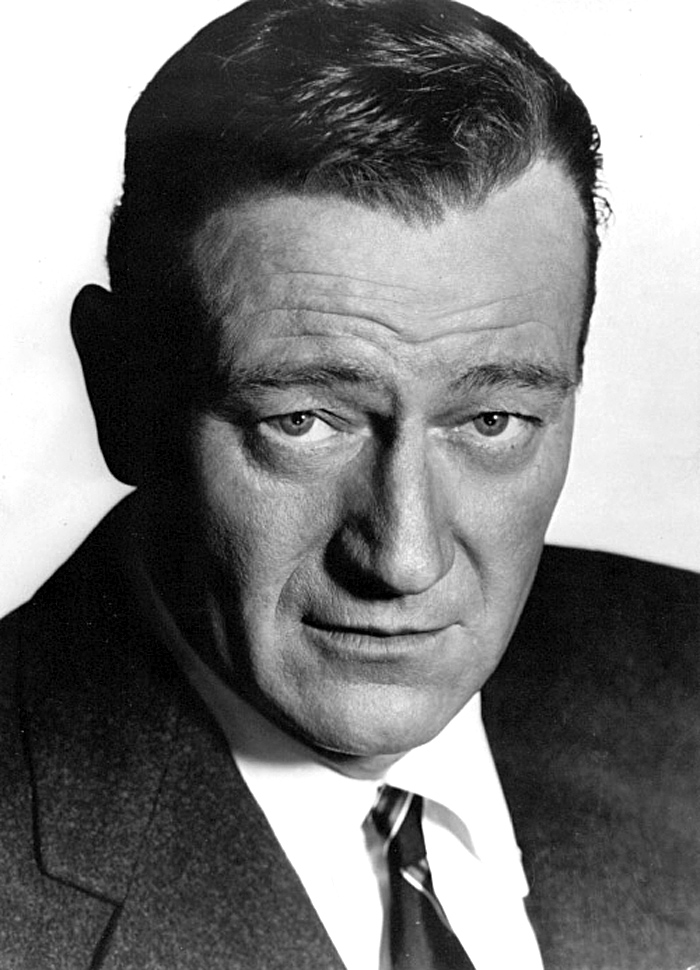
John WayneOne sure way to kill your leadership career is to lead scared.

Leading from a position of fear never brings good results. It causes you to make rash decisions, shrink from opportunities, and needlessly fight the wrong battles.

The opposite of leading scared is leading like a badass. What does a badass leader look like?

He confidently marches to the beat of his own drum, not swayed by popular opinion or the need to please others. He doesn’t put on airs, pretending to be something he isn’t, but stays true to his principles and values in all that he does. He doesn’t have to talk about being a badass (that’s a poser) because he knows he is a badass. A badass leader isn’t an uncooperative jerk, indiscriminately ticking people off. A badass leader knows his limits and takes pride in working with others to achieve the goals of the team. Understated, purposeful, and pursuing excellence in all he does. That’s a badass.

Examples of well-known badasses:

  • Abraham Lincoln – Presidential Badass
  • Condoleezza Rice – Diplomat Badass
  • Derek Jeter – Baseball Badass
  • Leonardo da Vinci – Renaissance Badass
  • Mother Teresa – Spiritual Badass
  • Albert Einstein – Intellectual Badass
  • Aristotle – Philosophical Badass
  • John Wayne – Western Movie Actor Badass

Get the idea? So how do you become a leadership badass? Here’s six ways:

1. Develop your competence – Competence breeds confidence, no two ways about it. If you want to be more secure in your leadership abilities then you need to keep learning and growing. Read books, take classes, get a mentor, and learn from others. Badass leaders aren’t content with the status quo. They are always striving to improve their craft.

2. Be vulnerable – Huh? Isn’t that the opposite of being a badass? No! Leaders that display vulnerability show they don’t have anything to hide. Posers are those who lead with a false sense of confidence, trying to hide their weaknesses from others. Badass leaders are acutely aware of their strengths and weaknesses and aren’t afraid to admit when they don’t know something. People crave authentic leadership and badasses are nothing if not authentic.

3. Focus on building trust – Trust is the foundation of badassery. You have to earn people’s trust before they will follow you and give their all. Badass leaders focus on building trust by being good at what they do, acting with integrity, caring for others, and following through on their commitments.

4. Build up other people – Badass leaders don’t feel the need to build themselves up by tearing down others. Secure enough in their self-worth, badass leaders take pride in the accomplishments of their team members and do everything they can to set them up for success. Badass leaders know that their success comes from the success of their people.

5. Get stuff done – Badass leaders don’t make excuses, they make things happen. They remove obstacles for their people, find the tools and resources they need, and provide the right amounts of direction and support they need to achieve their goals. Badass leaders are about doing, not talking. Badass leaders get stuff done.

6. Go against the grain – Doing what’s right is not always the popular choice, but badass leaders aren’t afraid to go against the grain when it’s the right thing to do. Badass leaders know they can’t base their self-worth on the applause of others and they aren’t afraid to ruffle a few feathers on occasion.

Every leader has the ability to be a badass. It’s an attitude, a belief, a way of being. Don’t lead scared, letting fear drive your behavior, but tap into your inner badassness and lead with confidence and assurance. Before you know it, people will look at you and say, “Now that’s a badass leader!”

Feel free to leave a comment and share your thoughts on what it means to lead like a badass.

What Does It Mean To Lead With Trust?

leadingwithtrust keyI’m convinced that leadership is much more about who you are than what you do. As such, there is nothing that speaks more to the quality of your character and leadership than the amount of trust people place in you.

But what does it mean to lead with trust? The presentation below, far from being a complete treatise on the subject, lays the foundation of leading with trust. I would love for you to leave a comment to add your thoughts on what leading with trust means to you.

You’re also invited to join me in the #LeadWithGiants TweetChat, October 7th, 4:00 p.m. PT/7:00 p.m. ET, as host Dan Forbes and I facilitate a discussion on Leading with Trust.

Three Words That Can Transform Your Leadership

Trust Stones“I trust you.”

When it comes to building trust in relationships, someone has to make the first move. One person has to be willing to step out, be a little vulnerable, and place trust in another person. Is it risky? Yes! Without risk there isn’t a need for trust.

So in a work setting, who makes the first move, the leader or the follower? Some would argue that trust has to be earned before it is given, so that places the responsibility on the follower to make the first move. The follower needs to demonstrate trustworthiness over a period of time through consistent behavior, and as time goes by, the leader extends more and more trust to the follower. Makes sense and is certainly valid.

I would argue it’s the leader’s responsibility to make the first move. It’s incumbent upon the leader to extend, build, and sustain trust with his/her followers. Why? It’s the leader’s job to create followership. It’s not the follower’s responsibility to create leadership. In order to create followership – influencing a group of people to work toward achieving the goals of the team, department, organization – trust is an absolute essential ingredient, and establishing, nurturing, and sustaining it has to be a top leadership priority.

When you make the first move and say “I trust you,” through word and deed, you accomplish the following:

  • You empower your people — Being trusted frees people to take responsibility and ownership of their work. Trust and control are closely related. We don’t trust others because we want to remain in control and over-supervising or micromanaging employees crushes their initiative and motivation. Extend trust means letting go of control and transferring power to others.
  • You encourage innovation — When employees feel trusted they are more willing to take risks, explore new ideas, and look for creative solutions to problems. Conversely, employees that don’t feel trusted will do the minimum amount of work to get by and engage in CYA (cover your “assets”) behavior to avoid catching heat from the boss.
  • You tap into discretionary effort — Trust is the lever that allows leaders to tap into the discretionary effort of their people. People who feel trusted will go the extra mile to do a good job because they don’t want to let the boss or organization down. Being trusted instills a sense of responsibility and pride in people and it fuels their efforts to succeed.
  • You free yourself to focus in other areas — What happens when you don’t trust your people? You end up doing all the work yourself. Leadership is about developing other people to achieve their goals and those of the organization. Does it take time? Yes. Is it hard work? Yes. Is it worth it? Absolutely! Develop and build trust with your team so that you can spend time on the critical leadership tasks that are on your plate.

Let me make an important point – I’m not suggesting that leaders extend trust blindly. It’s foolish to give complete trust to someone who isn’t competent or hasn’t displayed the integrity to be trusted. I’m talking about extending appropriate levels of trust based on the unique requirements and conditions of the relationship. Leaders have to use sound judgement in regards to the amount of trust they extend and it usually begins with small amounts of trust and grows over time as the person proves to be trustworthy. But the point is, someone has to make the first move to extend trust in a relationship.

Leaders – It’s your move.

Forget Accountability – Follow These 5 Steps Instead

AccountabilityI don’t like the word accountability. It’s always rubbed me the wrong way for some reason. I think it’s because it assumes the worst about people. When we talk about accountability, it always seems the assumption is a person is incapable of, or unlikely to, follow through on his/her commitments. So we spend a lot of time and energy creating systems, processes, or consequences to make the sure the person is held accountable.

I prefer the word responsibility. To me, responsibility has a positive connotation. It’s starting with the mindset that a person will be responsible if he/she is given the necessary tools and training. If a person is responsible, you don’t have to worry about him/her being accountable. Responsibility breeds accountability. Whereas focusing on accountability is only treating the symptoms of a performance issue, addressing responsibility is treating the root cause.

So how can leaders help their people develop an inherent sense of responsibility? Here’s five steps to get started:

1. Create a motivating work environment – You can’t motivate anyone. (What? Did he just say I can’t motivate anyone? Isn’t that one of my primary responsibilities as a leader?) Yes, I just said that. You can’t motivate anyone. Every person is responsible for his/her own motivational outlook. What you can do is create a work environment that allows your people to maximize their sense of autonomy, increase their level of relatedness with others, and develop competence in their work. Autonomy, relatedness, and competence are the variables that allow a person to be optimally motivated and it’s our jobs as leaders to foster an environment that brings out the best in our people.

2. Let your people take the lead in goal setting as much as possible – Think about your own experience. When have you felt the greatest sense of commitment to a goal? When you created it yourself (or had a hand in it), or when a goal was assigned to you? Most likely it was when you were involved in setting the goal because you had a sense of ownership. It was your goal, not someone else’s. Your people will exhibit more responsibility for accomplishing their goals if they are involved in setting them.

3. Be clear on expectations – If people are going to be responsible, they need to clearly understand the expectations of their commitment. Many times our frustrations with people not being accountable is due to a lack of clear expectations. Make sure people know why the goal is important, what the deadlines are, and what constitutes success. If the situation requires you to follow through with negative consequences, do so. Don’t make hollow threats.

4. Use the right leadership style – Your people have different levels of competence and commitment on each of their goals. It’s your job as a leader to flex your leadership style to provide the proper amount of direction and support your people need to accomplish their goals. If you don’t set your people up to be responsible and successful in achieving their goals, that’s on you, not them. (Hold yourself accountable…errr…responsible).

5. Let go – I’ve written previously about balancing control and responsibility. It’s easy to grab control from people when you see them underachieving or shirking their responsibilities. That doesn’t help your people develop responsibility and it only adds to your stress level and workload. If you’ve properly trained and equipped your people, you need to let go and let them succeed or fail on their own.

Starting with these five steps puts the onus on your people to live up to their responsibilities. It’s up to them to hold themselves accountable…to be responsible. The leadership mindset underpinning these steps is one of trust. Ralph Waldo Emerson said “Trust men and they will be true to you; treat them greatly and they will show themselves great.” Trust your people to rise to the occasion, to be worthy of your trust. Odds are they will prove themselves to be responsible and you won’t have to worry about holding them accountable.

Dysfunctionally Connected Workplaces – 3 Ways to Build Trust and Human Connection

Click to Download the Full Infographic

Click to Download the Full Infographic

Never in history have we been so technologically connected to each other in the workplace. Email, instant message, text message, and social media have enabled us to be in constant and immediate communication with each other. Yet record numbers of people are disengaged on the job and distrust their organizations, senior leaders, and coworkers.

We are dysfunctionally connected.

Based on research from the Pew Research Center and The Ken Blanchard Companies, 81% of employees say their leaders don’t listen well and 82% feel they don’t receive helpful feedback. Only 34% say they meet with their boss weekly and 28% never or rarely discuss future goals and tasks even though 70% wish they did. If that wasn’t depressing enough, consider that 64% of employees say they want to talk to their boss about problems they’re having with colleagues but only 8% say they actually do.

We are dysfunctionally connected.

“The typical workplace is at risk of becoming dysfunctionally connected,” says Ken Blanchard, author of more than 55 business books and world-renowned leadership expert. “People crave a deeper human connection at work. They need to feel a more personal and authentic connection with their managers and their peers that goes beyond what technology can provide.”

Creating trust and human connection starts with conversation. We have to detach from technology and actually speak to each other…you know…the old-school way of establishing a relationship. Demonstrating care and concern for others—being connected—is one of the four elements of a trusting relationship. It’s a critical requirement for any successful relationship in the workplace. Here’s three ways to build trust and true relational connection:

1. Have a people focus – People are more important than things. Don’t get so wrapped up in the busyness of your job that you neglect to build authentic relationships with others. Take interest in the lives of your colleagues and appreciate the diversity that everyone brings to the organization. Ask people what they did over the weekend, how their kids are doing, or what hobbies they enjoy. And here’s a novel idea – instead of sending a colleague an IM, get out of your chair, walk down the hall, and actually have a discussion!

2. Improve your communication – I love the line from the movie Cool Hand Luke when the prison warden says to Paul Newman’s character, Luke, “What we’ve got here, is failure to communicate.” That could be the motto for today’s workplace. You can build trust and connection by sharing information about yourself, and if you’re a leader, about the organization. Examine the frequency and ways in which you communicate and make adjustments if needed, particularly when it comes to giving and receiving feedback. Most importantly, listen. Simply taking the time to listen to people and truly empathizing with their concerns is one of the most powerful trust-building behaviors you can employ.

3. Recognize people’s efforts – Whenever I conduct training workshops I ask participants to raise their hands if they receive too much praise and recognition on the job. No one has ever raised a hand. The truth is that most people are starved for genuine appreciation for the work they do and a simple word of “thanks” or “attaboy” go a long way toward building trust and commitment. Learn how people like to be recognized and rewarded and find ways to catch them doing something right.

The leadership styles and practices of managers are key drivers of trust and engagement in the workplace. Last week, The Ken Blanchard Companies announced the release of The SLII® Experience, a new learning design for its flagship product SLII®, the world’s most taught leadership model. Learning to flex your leadership style to the needs of your followers, giving them what they need when they need it, will lead to high-trust relationships that foster the kind of connection and engagement that people crave in today’s workplaces.

Five Ways to Rapidly Increase Trust in Your Relationships

Trust Magnified“Trust takes a long time to build and just a moment to destroy.” You’ve probably heard that old adage before, haven’t you? Well, it’s not true.

Like many aphorisms, there is an element of truth to the saying as it applies to certain situations, but the statement itself is not an absolute truth when it comes to trust. Trust can be built very quickly (consider the trust you place in a surgeon, whom you’ve never met, performing emergency surgery on you) and be one of the most resilient forces in any relationship (think of the number of times you’ve eroded trust with a family member yet trust continues to survive).

When it comes to building trust in relationships, not all behaviors are created equal. What I mean by that is certain behaviors contain more “oomph” when it comes to building trust; they help trust develop faster. Much like a weightlifter increases his intake of protein to help fuel muscle development, people interested in rapidly building trust can leverage these five, high-trust behaviors:

1. Extend trust – Trust is reciprocal. One person gives it, another receives it and gives it back in turn. Since someone has to make the first move, why not you? It’s hard for people to trust you if you aren’t willing to trust them. Trust involves risk, and if you wait for a time when there’s no risk in a relationship, you’ll never trust. Be smart about who you extend trust to and how much you give, but don’t be afraid to make the first move.

2. Listen without judgement – Think of the people you’ve trusted most in your life. There’s a good chance that most, if not all of them, were people who listened to you when you were frustrated, angry, upset, or just needed someone to talk to. They didn’t condemn you for the way you were feeling but listened to your concerns and offered appropriate and timely counsel, without judgement or blame. Listening shows you care for people and is a critical component of building trust.

3. Show care and concern – As mentioned above with listening, demonstrating care and concern in relationships is critical to building trust. You can trust people you don’t know based on their expertise, but trust really accelerates when a genuine personal relationship is established. Take the time to truly build a personal relationship with others and you’ll see trust skyrocket.

4. DWYSYWD – Do What You Say You Will Do. Consistent, reliable, and dependable behavior is at the core of building trust. Follow through on commitments. Keep your promises. Be on time. Meet deadlines. It sounds simple enough, but unfortunately these commonsense basics are often the very behaviors we neglect the most. DWYSYWD and trust will blossom.

5. Admit your mistakes – Combined with number 4, admitting your mistakes is one of the most high-powered, trust-building behaviors you can use. Why is that? It shows your sense of humility and authenticity when you own up to your mistakes. It demonstrates to people that you are secure in yourself and you respect others enough to be up front and honest. Showing a little vulnerability goes a long way in building trust.

I’m not suggesting you use these behaviors in a manipulative fashion in order to further your own selfish agenda. Too many crooked politicians, televangelists, and corporate barons have already laid claim to that tactic. However, for people genuinely interested in building trust, these five behaviors can supercharge your relationships to new and higher levels.

What are your thoughts? Are there other behaviors you’ would add to this list to rapidly build trust? Feel free to leave a comment with your thoughts.

The 100 Most Trusted People in America…Sort Of

Top 100In June of this year Reader’s Digest published a list of the 100 most trusted people in America today…sort of. They compiled a list of over 200 opinion shapers and headline makers from 15 highly influential professions and polled a nationally representative sample of 1,009 American adults, asking them to rank each person on a scale of 1 (not at all trustworthy) to 5 (extremely trustworthy) based on how highly they rated each person’s…

  • Integrity and character
  • Exceptional talent and drive for personal excellence
  • Internal moral compass
  • Message
  • Honesty
  • Leadership

I say “sort of” because Reader’s Digest started with a defined list of 200 people, so I’m sure that you, I, and about 313 million other Americans were excluded. Also, I’m not quite sure what “message” stands for as one of the variables being rated, and “leadership” can mean different things to different people, so without a definition of what those categories mean, it’s hard to put much stock in them. Regardless, the survey presented some fun and interesting perceptions about trust. Highlights of the survey included…

  • Actor Tom Hanks (65%) was the most trusted individual, followed by Sandra Bullock (63%), Denzel Washington (62%), Meryl Streep 61%), and Maya Angelou rounding out the top five. See the complete list here.
  • Americans trust people they know more than anyone famous. The three highest scores on the list were “your own doctor” (77%), “your own spiritual advisor” (71%), and “your child’s current teacher” (66%).
  • “Doctor” topped the list as the most trusted profession, and doctors who appear on TV were rated more trustworthy than doctors who are best-selling authors.
  • Judge Judy (51%) had the highest score of all the judges on the list, including all nine Supreme Court Justices. Boy, doesn’t that say a lot!?
  • Movie stars were rated as one of the most trusted professions, although being the highest-paid doesn’t necessarily equate to being trusted. Kristen Stewart, star of the Twilight movies and the highest paid actress in 2012, received the lowest score (24%) among female movie stars.
  • Americans trust altruistic people and professions, as shown by doctors, educators, and philanthropists scoring among the top five professions, and Maya Angelou, best-selling author, poet, and American Studies professor at Wake Forest, coming in at number 5 on the list.
  • Michelle Obama (53%), rated more trustworthy than her husband, President Obama (45%), Hillary Clinton (47%), and Colin Powell (50%).

I don’t put a tremendous amount of faith in surveys like this because I think our society tends to engage in too much hero-worship of the rich and famous, but it’s interesting to see how perceptions shape our views of other people’s trustworthiness.

What’s your perception of this survey? Do you think the six categories used by Reader’s Digest are the best indicators of a person’s trustworthiness? Feel free to leave a comment.

How NOT to Lead – Six Lessons from Breaking Bad’s Walter White

Walter WhiteI’m a fan of the television show Breaking Bad. If you’re not familiar with it, the show chronicles the transformation of Walter White (played by Bryan Cranston) from a mild-mannered, milquetoast high-school chemistry teacher who “breaks bad” and turns into a crystal meth-producing drug lord in order to finance his cancer treatments and provide for his family after his likely death.

The writing, story-telling, character development, and dialogue in the show are top-notch, and despite the edgy subject matter, I was hooked…addicted?…after just a small taste. As the series comes to a close tonight with the premiere of the final eight episodes, I reflected on some leadership lessons from Walter White. He’s an excellent study on how NOT to lead. If you employ these strategies you might achieve temporary success, as Walter White has, but eventually you’ll go down in flames…which is my prediction for Walt’s fate this season.

1. Don’t trust anyone – Walter White never fully trusts anyone, even himself at times. He only trusts people enough for them to do what he needs them to do, so he keeps people on a “need to know” basis, hoards power and information, and makes the final decisions. Trust is the foundation of any successful relationship, and if you don’t have it, you’ll always be looking over your shoulder to see who’s on your trail and your relationships will always have an air of suspicion and doubt surrounding them.

2. The end justifies the means – Walt started with the noble, yet morally ambiguous, goal of wanting to provide for his family. His odds of beating cancer were slim, and with a son starting college and a baby daughter on the way, Walt saw the cost of his cancer treatments leaving his family in financial ruins. What started as a quick-hit scheme to meet the financial needs of his family quickly devolved into Walt being willing to do anything – lie, cheat, steal, murder – to protect his drug empire and meet the dark and desperate needs of his shadow self. This strategy is particularly useful for leaders who view people as objects, just mere speed-bumps on the road to success, and are willing to run over anyone at anytime in order to get what they want.

Pyramid of Choice3. Erode your morality and integrity one choice at a time – Walter White didn’t become an evil mastermind and drug kingpin overnight, it was a series of small choices that led him down the road to destruction. The work of Dan Ariely and Tavris and Aronson provide insight into this slippery slope of human behavior. Tavris and Aronson use the “Pyramid of Choice” to illustrate the “what the hell effect,” which explains how our rationalizations of wrong choices makes it easier for us to make further wrong choices that continually erode our integrity. Moral of the story? Every decision counts. Make good ones that reinforce your integrity.

4. Intoxicate yourself on powerStudies have shown that money and power can make you less empathetic toward other people and Walter White’s experience illustrates that phenomenon. As Walt gains money and power in the drug world he quickly loses sight of his original goal. Jesse, Walt’s former student and partner in crime, points out that Walt originally said he needed to make just shy of $1 million to provide for his family, and now that he had $5 million stashed away it still wasn’t enough. If you’re in a leadership role to fulfill your needs for power, position, and status, you’re in it for the wrong reasons. Get out now!

Say My Name5. Let your ego drive your actions – Over the seasons we learn that Walt co-founded a company called Gray Matter Technologies, sold his share for $5,000, and now the company is worth over $2 billion. Walt never reconciled his ego-needs with the direction his life took, and now that he’s got money and power from his drug business, his ego runs wild and manifests itself as “Heisenberg,” Walt’s street name. In one memorable scene where Walt is arm-twisting a rival drug dealer into becoming the distribution arm for Walt’s superior product, he not only revels in revealing his identity as Heisenberg, he forces his competitor to pay homage to him by demanding that he “Say my name.” Use that tactic in your next team building meeting and see how far it gets you.

6. Manipulate people to get what you want – Walt’s relationship with Jesse is a picture in manipulation. Walt goes so far as to poison the son of Jesse’s girlfriend and convinces Jesse to break up with her so there would be no one competing for Jesse’s time and attention. Jesse is ultimately a pawn in Walt’s strategy to build his drug empire. Demonstrating care and concern for people is a key factor in building trust, and if you aren’t genuine and authentic in wanting to be in relationship with people, others will quickly see through your facade.

It will be interesting to see how the character of Walter White fares over the last eight episodes of this series. We’ve seen plenty of real-life examples of prominent leaders who display these traits and characteristics and their fate isn’t pretty. Will Walter White fare any better? I don’t think so.

Most People Don’t Under-Perform, They’re Under-Led – 5 Ways Leaders Sabotage Performance

Slip on Banana PeelNot too many people get out of bed in the morning, head in to work, and say to themselves “I’m really looking forward to screwing up today!” Sure, there are always a few bad apples with horrible attitudes that seem to thrive on getting away with doing the least amount of work possible, but by and large most people want to succeed on the job. So why do we struggle with so many under-performers in the workplace?

“I think most people don’t want to under-perform,” Kathie McGrane, Course Manager/Management Analyst at the Government Accountability Office (GAO) said to me in a recent conversation, “they’re just under-led.” Kathie’s insightful comment got me thinking about the ways leaders unknowingly sabotage the performance of their people. Here’s five common ways:

1. They don’t intentionally focus on building trust – Trust is the bedrock foundation of any successful relationship. There isn’t a business or leadership strategy around that will make up for a lack of trust between leaders and followers. Without trust your leadership effectiveness will always be limited. The problem is that most people think trust “just happens,” like some sort of relationship osmosis. The truth is that trust is built through the use of very specific behaviors, and if leaders don’t specifically focus on establishing healthy, high-trust relationships with their people, under-performance will be the norm.

2. Lack of clear goals and expectations – This past week I conducted a job interview and the candidate described the training she received at her previous job. She said “I was given a Sharpie pen, shown to my desk, and told to ‘figure it out.'” A CEO I’ve coached in the past was explaining his frustration about one of his VP’s not “stepping up” to lead like he expected him to. When I asked him if he had made those expectations clear to the individual he replied, “Well, now that you mention it, no, I haven’t.” And we wonder why people under-perform? Your people need to have clear goals and expectations so they know exactly what is required. Make sure they know what a good job looks like.

3. Leaders use the wrong leadership style – When it comes to leadership, one size does NOT fit all. Leaders commonly under or over-supervise people. Under-supervision is when the leader is too hands-off when an employee needs more direction and support on a goal or task. Over-supervision is when the leader micromanages too much when the employee is competent and committed to do the task on his/her own. Leaders need to understand that a person can be at different levels of development on different goals or tasks. Just because an employee may be a superstar in organizing and managing projects, doesn’t mean he/she is a pro at giving presentations to a group of executives. Leaders need to use a variety of leadership styles to give employees the right amount of direction and support they need on each of their job areas.

4. They don’t stay in touch with performance – Leaders not being aware of the performance trends of their employees is often a cause for under-performance. Leaders should have regular one-on-one meetings with their direct reports every 1 to 2 weeks. The one-on-one meeting serves to keep the leader informed of how the employee is doing on his/her goals and tasks, and it allows the employee to ask for needed direction and support. Too often leaders fall prey to “seagull management” – They occasionally fly in, squawk and make a bunch of noise, crap all over the place, and then fly away. Don’t be a seagull manager. Stay in regular touch with your employees so you can give them the day-to-day coaching they need to succeed.

5. Fail to give helpful feedback – Many leaders fail to give any feedback, and when they do, it’s often not very helpful to the employee. One type of feedback is praise. When employees are doing a good job, let them know! A well-timed praising does wonders for developing trust in a relationship. Redirection is another type of feedback that leaders should use when an employee’s performance is off-track. Redirection is specific about what needs to be corrected, timely and relevant to the situation at hand, and about moving forward. Don’t gunny sack feedback and surprise the employee with it at the annual performance review.

When leaders find that employees are under-performing, the first action they need to take is to look in the mirror and examine what they’ve done (or not done) to set the employee up for success. There are certainly situations where leaders will find they’ve done everything possible to help an employee perform at an acceptable level and the best thing is to part ways. However, leaders will often find they’ve unknowingly sabotaged the performance of their people by neglecting some of these leadership fundamentals.

What’s Your ROT – Return on Trust?

W Edwards Deming

W. Edwards Deming

As leaders and managers we are programmed through education and experience to constantly measure and manage the results of our activities. Want to make a new capital investment? You better perform a cost/benefit analysis. Need to assess the effectiveness of a particular business strategy? Figure out the ROI – Return on Investment. If it’s important to our business then we have to be able to measure it. That’s our motto.

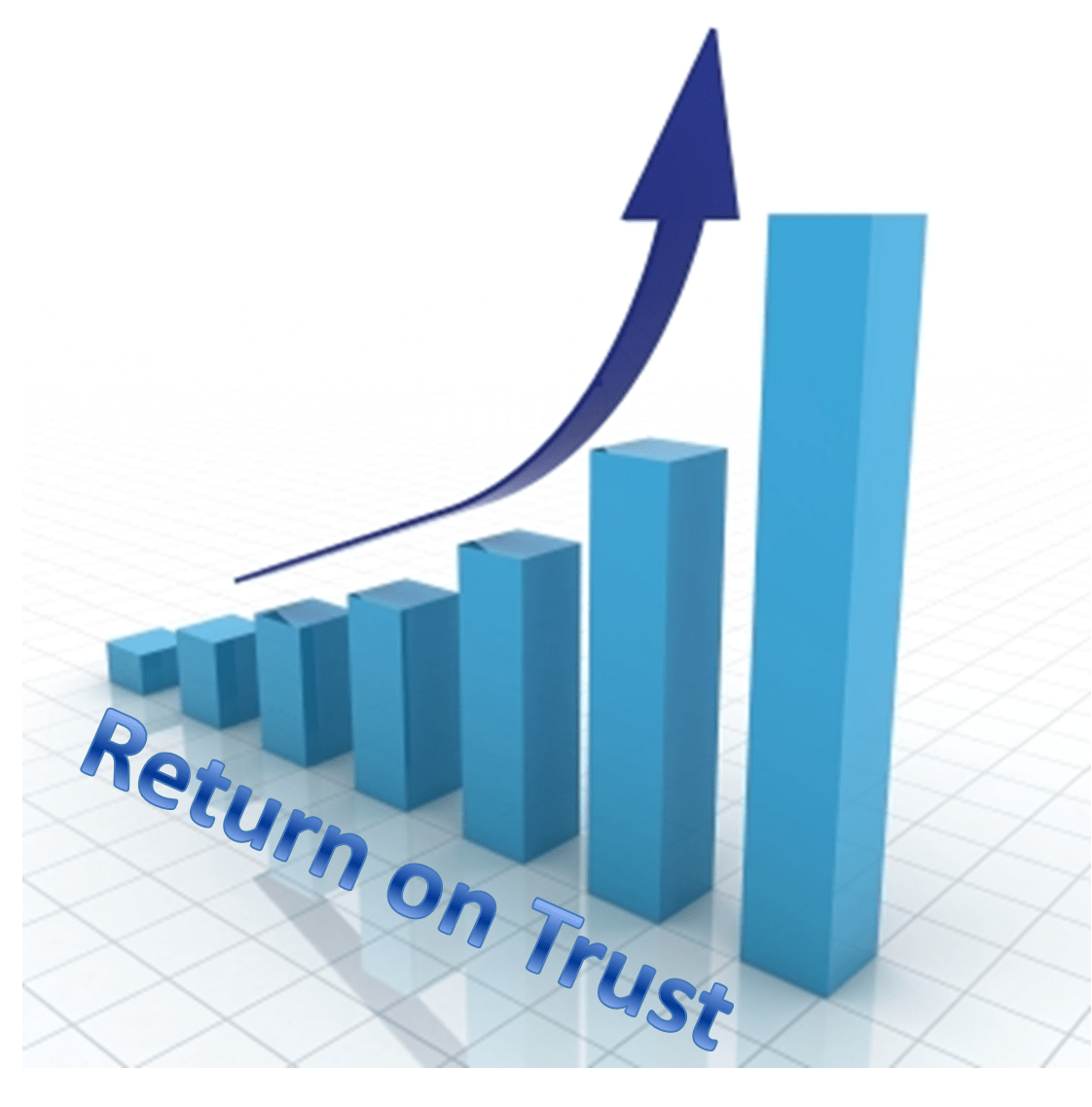
But what about trust? How do you measure the impact of trust, positively or negatively, on your business? What’s your ROT – Return on Trust?

Most leaders I speak with agree that trust is important but they often think it’s just another one of those “soft” people issues like engagement, empowerment, well-being, or morale. They think trust “just happens,” as if through some sort of relationship osmosis, and they certainly don’t think you can measure it.

They’re wrong. You can measure trust, but you have to know where to look and understand how it shows up in organizations.

What Trust Looks Like in Organizations

  • People keep their commitments and are consistent in their behavior
  • Risk taking is encouraged and rewarded
  • People feel safe in sharing their ideas and opinions
  • Team members have a shared sense of responsibility and commitment to the organization
  • People are treated equitably and ethically, regardless of their position or rank
  • The culture promotes and rewards honesty and ethical behavior
  • Senior leadership communicates transparently and authentically
  • Mistakes are viewed as “learning opportunities” rather than mortal failures
  • People feel valued and are engaged in their work
  • Productivity and creativity flourishes

Return on Trust

Interpersonal trust is developed through the use of very specific behaviors that demonstrate your competence, integrity, value for relationships, and dependability. Organizational trust is developed through the use of sound, common-sense business practices that align with the organization’s values, prioritize the value of human worth in the workplace, foster transparency and accountability, and emphasize customer loyalty and retention.

Return on TrustYou can measure ROT by using common sense, as an executive of one of the world’s largest home improvement retailers shared with me. He said that in his 22 year experience with the company, the teams and stores that had the highest levels of trust consistently recorded the lowest people costs around turnover, accidents, and inventory shrink. They also achieved the highest revenues, profits, and employee engagement and customer satisfaction scores.

You can also measure ROT by examining the financial performance of high-trust organizations. Research by the Great Places to Work Institute, publisher of the Fortune 100 Best Companies to Work For list, has shown that between 1997-2011, high trust companies outperformed the Russell 3000 and S&P 500, posting annualized returns of 10.32% versus 4.02% and 3.71%, respectively. Additionally, those best companies provide 4 times the returns than market average for comparative low-trust companies and typically experience a 50% lower turnover rate.

Whether you see the everyday, common sense results of high levels of trust, or you evaluate the financial metrics of high-performing/high-trust companies, Return on Trust is something every leader should measure.

Your People Are Keeping Score – Six Tips to Help Leaders Play Fair

Keeping ScoreCoaching a bunch of energetic 5-6 year old kids in tee-ball is really just controlled chaos. Tee-ball is normally the introduction to baseball that children experience at age 5-6, and generally speaking, most leagues don’t keep an official score for tee-ball games. The purpose isn’t to win, it’s to teach the fundamental skills and rules of baseball. Notice that I said the leagues don’t keep an official score. I remember many occasions while coaching tee-ball that kids in the dugout would be tallying up the score to see who was winning and losing!

Fast forward 20 years or so to the workplace and we find that not much has changed. Adults are still keeping score, only now it’s about who received the new project, promotion, or corner office. And as soon as someone perceives the leader made an unjust decision, the first thing we hear is exactly what five-year old tee-ballers say when they think another player has violated the rules: “That’s not fair!”

Leaders aiming to build trust in relationships need to pay particular attention to the issue of fairness. “No problem,” you may say, “I treat everyone the same, no matter what.” Actually, that can be one of the most unfair things you do! A quote from Aristotle speaks to this: “There is nothing so unequal as the equal treatment of unequals.” People should be treated equitably and ethically, given their individual needs and circumstances, and the differences between people should be recognized and valued, not diminished.

In order to build and maintain trust with followers, leaders need to exhibit fairness through the distribution of organizational resources and application of policies to all team members. It’s helpful to understand exactly what “fairness” means in an organizational context. Fairness is composed of two main elements: distributive justice and procedural justice. Distributive justice is fairness in the organization’s pay, rewards, and benefits for employees. Procedural justice is fairness in the organization’s decision-making processes of how those rewards and benefits are doled out. Of the two, procedural justice is the element most under control of individual leaders and is the aspect of fairness most closely linked with building or eroding trust with followers.

Based on research from The Ken Blanchard Companies, procedural justice was ranked as the most important organizational factor for employee retention. Additionally, over 60% of respondents believed the primary responsibility for influencing and improving procedural justice rested with their immediate supervisor.

So how can leaders be fair and build trust with their team members? Here’s a few suggestions:

  • Be transparent – Share information about the criteria and process that you use to make decisions. Putting all your cards on the table eliminates doubt and mistrust.
  • Increase involvement in decision-making – As much as possible, involve the people who will be affected by your decisions in the process. People who plan the battle rarely battle the plan.
  • Play by the rules – Clearly establish the rules, play by them, and hold others and yourself accountable to following them.
  • Listen with the idea of being influenced – Don’t make the mistake of thinking that you know it all. Ask others for their input and genuinely listen with an open mind and be willing to change course if needed.
  • Don’t play favorites – No one likes a teacher’s pet so don’t create one. That will eliminate a key source of jealousy.
  • Save spin for the gym, not the office – Be authentic and genuine in your communications. People see through the political spin.

Remember, your people are keeping score of your every behavior. Play fair!

Are You a Thermometer or Thermostat Leader?

When it comes to leadership, are you a thermostat or a thermometer? Mark, my friend and colleague, posed that odd question to me this week. He went on to explain the difference between the two.

thermometerA thermometer reflects the temperature of the environment. It simply reacts to what’s happening around it. If the temperature is hot, it tells you so. If it’s cold, the thermometer reflects that reality as well. It’s a dumb instrument in the sense it doesn’t contain intelligent, multipurpose functionality. It has one purpose and one purpose only.

A thermostat, on the other hand, regulates the environment. It sets the desired temperature of the room and actively works to maintain it within a given range. If the temperature rises above the goal, the thermostat signals the air conditioner to crank up and cool the room down. If the temperature falls below the goal, the thermostat causes the heater to turn on in order to warm the room up. The thermostat is intelligent in the sense it’s always monitoring the environment, and if the temperature gets too hot or cold, it decides what to do to correct the situation.

Thermometer leaders react to their surroundings. When the tension gets high and people are on edge, these leaders are often seen losing their cool. They become irritable, harsh, demanding, critical, impatient, and maybe even lose their temper and yell or curse. Thermometer leadership doesn’t inspire trust and commitment with people, it erodes it.

thermostatThermostat leaders, however, constantly have a pulse on the morale, productivity, stress level, and environmental conditions of their team. When the temperature gets hot because the team is under pressure of a heavy workload, resources are scarce, or pending deadlines are causing stress, they cool things off by acting as the calming influence with the team. They take time to listen to the concerns of their team members and provide the necessary direction and support that’s needed to help the team achieve its goals. Thermostat leaders also alleviate pressure on their team by mixing in some lighthearted fun at opportune times.

Likewise, when work is slow and people are prone to just go through the motions, thermostat leaders get their teams refocused on the vision, purpose, and goals of the team. Because they are actively monitoring the environment of their teams, they know when the team needs to be challenged with new goals and priorities, or when they just need a friendly kick in the pants to stay focused on their current initiatives.

Thermostat leaders build trust and confidence with their followers, whereas thermometer leaders erode trust. When times get wild and crazy, people want to see their leaders react with calm, focused, and determined leadership. They want them to set the tone for how the team should react during tough times and navigate the rough seas ahead. That’s a tough challenge for leaders because they are team members themselves and are subject to the same, and often times more and different, stressors of those experienced by the team.

So, how would you respond to this question? Are you a thermometer or thermostat leader?