Leading with Trust

Leaders – Do You Suffer From Low T?

Low T2Feeling like a shadow of your former self? Is there a lack of emotional connection in your relationships? Do you find others not sharing important information with you or excluding you from activities? If so, you might be suffering from Low T. Don’t worry, you’re not alone. Millions of well-intentioned leaders experience Low T at some point in their career. It’s a treatable condition but it requires leaders to understand the causes Low T and how to avoid them.

Causes of Low Trust [Low T]

Trust is an essential ingredient in healthy relationships and organizations. It allows people to collaborate wholeheartedly with one another, take risks and innovate, and devote their discretionary energy to the organization. However, there are certain behaviors and characteristics of people who experience Low T in the workplace.

    • Taking credit for other people’s work
    • Not accepting responsibility
    • Being unreliable
    • Not following through on commitments
    • Lying, cheating
    • Gossiping or spreading rumors
    • Hoarding information
    • Not recognizing or rewarding good performance

Treating Low Trust [Low T]

Reversing Low T requires understanding the four elements of trust and using behaviors that align with those elements. The four elements of trust can be represented by the ABCD Trust Model:

Able – Demonstrate Competence. Leaders show they are able when they have the expertise needed for their job. They consistently achieve results and facilitate work getting done in the organization. Demonstrating competence inspires others to have confidence and trust in you.

Believable – Act with Integrity. Trustworthy leaders are honest with others. They behave in a manner consistent with their stated values, apply company policies fairly, and treat people equitably. “Walking the talk” is essential in building trust in relationships.

Connected – Care About Others. Being connected means focusing on people, having good communication skills, and recognizing the contributions of others. Caring about others builds trust because people don’t care how much you know until they know how much you care.

Dependable – Maintain Reliability. Dependable leaders follow through on their commitments. They respond timely to requests and hold themselves and others accountable. Not doing what you say you will do quickly erodes trust with others.

Do You Have Low T?

Take our online quiz to help you find out if you may have Low T.

Don’t Settle for Leading with Low T

Too many leaders settle for leading with Low T because they don’t understand how trust is actually formed in relationships. Trust doesn’t “just happen,” as if through some sort of relationship osmosis. Trust is built over a period of time through the intentional use of trust-forming behaviors. Good leaders focus on using trust-building behaviors and avoid using behaviors that erode trust.

Five Warning Signs You Aren’t Trusted As Much As You Think You Are

Danger Thin Ice“I don’t trust you.”

You will rarely, if ever, hear someone say that to you directly. Trust is one of those topics, along with religion and politics, that is usually taboo to discuss openly in the workplace. It’s often talked about in the shadows and hallways of the organization, not in conference rooms and one-on-one meetings.

Because trust is a difficult and sensitive issue to address, people often feel blind-sided when it finally comes to their attention that they have “trust issues” in their relationships. None of us likes to think we’re not trustworthy, and when we learn other people don’t perceive us that way, it comes as a shock and disappointment. However, it doesn’t have to be that way. If you pay attention, you can see the warning signs of low trust in your relationships. Here’s five warning signs you’re skating on the thin ice of low trust:

1. Rumors and gossip – Since trust can be a touchy subject to address, particularly with the person that isn’t trusted, low-trust concerns usually surface in rumors and gossip. If you find that you are frequently the subject of the office water cooler discussion, you may want to figure out why.

2. Secrecy and withholding of information – It goes without saying that people won’t share important information with you if you aren’t trusted. Consistently finding that you’re left in the dark or are the last to know about critical details should be a cause for concern.

3. Exclusion from activities – Being competent in your role and building positive relationships are two key components of being a trustworthy person. Being passed over, or worse, not even being considered for key projects or initiatives, may mean that you’re falling short in those two areas.

4. Your opinion isn’t valued – When trustworthy people speak, other people usually listen. Trust is built over a period of time as people prove they are competent, ethical, dependable, and care about others. If you don’t carry that sort of weight in your relationships, you may need to work on building trust.

5. Stress or tension – It often feels like you’re walking on eggshells when it comes to interacting with people you don’t trust. You’re suspicious of their motives, how they’ll react, and whether or not they’ll take advantage of you. If people always seem to be on guard around you, it could be a sign they don’t trust you.

Just because people don’t normally say “I don’t trust you” right to your face, doesn’t mean they aren’t communicating that truth to you in other more subtle, but no less serious ways. Pay attention to the warning signs of low trust in your relationships and take steps to build trust in healthy, productive ways.

What other warning signs of low trust have you seen in relationships? Feel free to share your thoughts by leaving a comment.

Four Points in Building Trust with Millennials

Millennials“Toto, I’ve a feeling we’re not in Kansas anymore.” ~ Dorothy, The Wizard of Oz

Judy Garland’s line from The Wizard Oz could appropriately capture the feeling of many leaders when it comes to managing Millennials in the workplace – it’s a whole new world! Millennials, or Gen Y (born 1982-1995), are rapidly becoming a greater share of the workforce and some studies have estimated that by 2025 they will comprise 75% of the working population. Like each generation before them, they bring a unique blend of attitudes, traits, and characteristics that define how they “show up” at work. Building trust with this generation and leveraging their strengths in the workplace is a pressing priority for today’s generation of leaders.

Earlier this year I had the privilege of participating in a panel discussion on the topic of Trust in Millennial Leaders, on the Trust Across America radio show, hosted by my friend Jon Mertz, a leadership writer and marketing executive. Jon assembled representatives from Gen Y who are in the early stages of their careers along with a couple of “old guys” (me included!) further along in their career.

The insightful discussion produced a number of valuable learning moments, four of which stood out to me as particularly important for leaders to grasp in order to build trust with Millennials.

1. Millennials are a trusting, optimistic generation – Whenever you speak about generational demographics, there is the danger of over-generalizing and stereotyping individuals. With that said, by and large the Millennial generation has a higher propensity to trust others and they value authentic relationships. A study by Deloitte showed that 87% of the Millennials they surveyed reported that they “completely,” “mostly,” or “moderately” trust their boss, with nearly 1 in 3 falling in the “completely” category. This opens the door for leaders to extend trust to the Millennials on their team with the expectation that trust will be reciprocated. Trust is the foundation of any successful relationship and it’s the starting point for leaders interested in maximizing the talents of the younger generation.

2. Tech savviness of Millennials opens new doors – Gen Y is the first workforce generation to grow up completely in the world of modern computers and it fundamentally drives the way they approach work. Millennials take to technology like a fish takes to water and their use of technology is forcing organizations to reevaluate their business practices. The ubiquitous use of social media by Millennials is one prominent example. For many younger workers there is a blending of work and social community interaction through Facebook, Twitter, or other platforms. Today’s leaders need to consider ways to build trust with Millennials through the use of technology rather than viewing these new methods with fear or suspicion.

3. Millennials are quick learners – In large part due to their upbringing in the computer age, Millennials are conditioned to consume, absorb, and apply large amounts of information. (No experience with creating a business plan? Google it and have nearly 3 million options to meet your need!) Because of their fast-paced nature to learn on the fly, many in this generation have gotten the bad rap of not wanting to “pay their dues” or are “entitled” (Generation Me!) to quick promotions and pay raises. Leaders interested in building trust would be wise to avoid labeling Millennials with these stereotypes and treat them on an individual basis. As Jon Mertz pointed out, many Gen Y’ers understand that growth in organizations today is much more horizontally focused than vertically up the traditional corporate ladder.

4. Millennials know the power of community – A common trait of this generation is their focus on social causes and the strength that comes from like-minded individuals banding together to achieve a common goal. Whether it’s assisting in disaster relief, combating slave trafficking, or providing clean water to villagers in Africa, Millennials have emerged as leaders in addressing social issues. What does that mean for organizational leaders? Millennials are naturals at teamwork! Who wouldn’t want that skill in their company? Millennials are eager and ready to accept new responsibilities and have a natural inclination to partner with others to achieve ambitious goals. Rather than forcing Millennials to “wait their turn,” leaders can build trust by looking for appropriate projects and growth opportunities where they can showcase their talents.

I encourage you to listen to the recording of the radio show. I think you’ll come away from the discussion with a greater appreciation for the skills and talents that Millennials bring to the workforce and a greater hope for a bright future with this new generation of leaders.

Build Trust Today or Lose Talent Tomorrow – 3 Tips to Keep Your Top People

dear-boss-i-quitIf you ask organizational leaders to name their top five challenges, there’s a good chance that retaining key talent will be on the list. Every person and role in your organization is important, but there are mission critical jobs and high performers that contribute substantially more to your bottom line success and it’s those people you can least afford to lose.

The U.S. Bureau of Labor Statistics reports an increasing trend in voluntary turnover and the rate of unemployment for people with college degrees is about half the national unemployment rate and is decreasing. There is expected to be an ongoing talent shortage well into the next decade as Baby Boomers retire, technology and job specialization increase, global competition for talent rises, and education systems struggle to keep up with the demands of business.

Not only is competition for talent going to increase, the Hay Group reports that 20% of employees plan to look for a new job in the next two years and another 20% plan to leave within the next five years. The reasons cited for jumping ship? Of course the chance to make more money somewhere else is always high on the list, but there is a growing discontent among the workforce after years of low to no pay increases, increased pressure to “do more with less,” and low levels of trust with organizational leaders who have shown little to no regard for their employees.

Building and nurturing high-trust relationships with key talent is essential for keeping them on your team. Here’s three tips to help you build trust and retain talent:

1. Learn the skill of building trust – Yes, you can learn to build trust. Most people don’t give much thought to building trust. They think it “just happens” over time like some sort of relationship osmosis. The fact is that trust is built through the use of very specific behaviors and if you incorporate those behaviors into your leadership practices you will have high-trust relationships.

2. Foster a culture of engagement – High performers are more willing to stay in jobs and organizations where their needs for autonomy, relatedness, and competence are being met. All people, especially your top talent, thrive on being in control of achieving their goals. They want to continue to develop their competence and expertise and establish meaningful relationships with team members.

3. Ask them to stay – Unfortunately, most leaders don’t ask their top performers to stay until they’ve submitted their resignation and are walking out the door. You can build trust with your key talent by engaging in courageous career conversations. Ask your top people what it will take to keep them in your organization and try to find creative ways to provide them opportunities for growth, learning, or expanded responsibilities.

Managing high performers can be just as challenging, if not more so, than managing poor performers. In most cases of poor performance, you can identify specific job skills or personal attributes that need to be improved and put a plan in place to work on those specific issues. When it comes to high performers, you’re constantly having to be creative and find new ways to keep them engaged and growing which can be absolutely exhausting!

Regardless of whatever talent management and retention strategies you employ, building a foundation of trust is critical to the success of keeping your best performers. You can choose to build trust today or lose talent tomorrow.

Three Critical Skills for Managing the Overextended Workforce

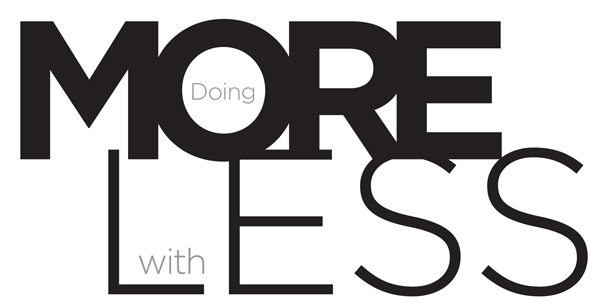
DoingMoreWithLess“Doing more with less.” I cringe whenever I hear that phrase because it feels so punitive and unsupportive, and if you’re a leader, I suggest you completely eliminate that phrase from your vocabulary. Whenever you utter those words to your team, your people feel like you don’t understand their circumstances and it erodes trust and confidence in your leadership. They think you just don’t get it.

I’ve found three strategies helpful in dealing with the challenge of doing more with less:

1. Communicate the reality to your team – Share all the information you have about your business, including the good, bad, and ugly. Let people know what’s going on. Information is viewed as power, and if you withhold it from your people, they view you with suspicion and think you’re untrustworthy and power-hungry. People without information cannot act responsibly. People with information are compelled to act in the best interests of your organization.

2. Create a high-involvement strategy – If you’re sharing information with your team, the next step is to solicit their involvement in helping solve your business challenges. Ask for their ideas and gather their input. Who knows better how to solve your pressing business issues than the people who are doing the work on the frontlines? There is an old saying that goes “People who plan the battle rarely battle the plan.” Get your people working with you, not against you.

3. Dial up support for your people – Listening is a great first step in letting people know you care. Take time to understand their frustrations and challenges so you can make better informed decisions. Another way to support your people is to jump in the trenches with them and help them get the work done. Why do you think the President always tours disaster areas, picks up a shovel, and helps workers for a period of time? He does that to send the message that we’re all in this together and he’s not too busy to lend a hand. Being visible and present is key to supporting your team. There’s no way your team is going to follow you if you’re missing in action when the bullets are flying.

On Wednesday, May 8th, 9:00-10:30 a.m. PST, I’ll be one of three speakers conducting an online workshop on this topic of “doing more with less” and managing the overextended workforce. Motivation expert Susan Fowler will be speaking on “Motivating Yourself and Your Team During Stressful Times” while leadership speaker Ann Phillips will address “What Leaders Can Do To Recognize and Head-Off Employee Meltdowns.” I’ll share “How to Become the Kind of Leader that Others Trust.” I hope you’ll be able to join us!

3Critical_Skills_Slide_V2

Lack of Self-Control Erodes Trust – 5 Ways to Bolster Trust and Self-Control

Self ControlI lack self-control around donuts. Donuts are to me what kryptonite is to Superman. They render me weak, helpless, and virtually incapable of escaping their mesmerizing powers. Once I bite into the soft and fluffy baked goodness, all of my self-control goes out the window. On a Friday morning just a few weeks ago I used my expert leadership skills to organize a donut acquisition initiative (basically scrounging up money around the office and sending our gopher…errr…newest team member, to run to the local donut shop). After devouring half the box, I spent the rest of the afternoon in a donut coma, glazed and confused.

Recent research shows that our lack of self-control influences people’s perceptions of our trustworthiness. Researchers at the Vrije Universiteit Amsterdam conducted four different experiments to gauge the relationship between a person’s self-control and perceptions of his/her trustworthiness. In the first experiment, subjects read a story about a student with money problems who either resisted the urge to spend money for music CD’s or splurged on purchasing a whole stack. In rating the self-control and trustworthiness of the student, the subjects gave the cost-conscious student significantly higher scores on both self-control and trustworthiness than the free-spender.

In the second experiment, couples rated their partner on trustworthiness and specific behaviors related to self-control: goal achievement, reliability, and forgiveness. The most forgiving, reliable, and successful partners were rated the most trustworthy. The third and fourth experiments focused on the factors of temporary depletion of self-control and its influence on trustworthiness. Subjects were less likely to trust someone when he/she had just completed 15 minutes of a strenuous task than someone who had only spent 2 minutes on the task (measured through an economic game involving the subject).

I’m sure I’m not the only one that battles with a lack of self-control. Whether it’s eating too many donuts, losing our temper, running late for appointments, or failing to deliver on commitments, we all have our challenges. Here’s five steps to improve our trustworthiness through better self-control:

1. Don’t make promises you can’t keep — Being a dad has taught me the value of this lesson. If you’re a parent, how many times have you heard your child say “But Mom/Dad, you promised!” I only promise to do something that I know I’ll be able to do, otherwise I try to set clear expectations of what I’m committing to do so that I’ll be able to follow through. It’s a cliché but it’s true and effective—under-promise and over-deliver.

2. Admit your weaknesses — My team knows that I love donuts and they are a particular weakness of mine. So when I occasionally fall off the wagon and go on a donut binge, they are more forgiving and less judgmental of my actions than if I pretended to be a health food junkie and looked down on those who eat donuts. Admit your weaknesses and ask for others to help you follow-through on your good intentions.

3. Forgive yourself and others — People who forgive themselves and others are perceived as more trustworthy than those who don’t. Forgiveness reveals a vulnerable and authentic side of your self that draws people to you. Forgiveness communicates a message of understanding and empathy for someone, oftentimes because the one granting forgiveness has faced the same or similar challenges and has been granted forgiveness from others in the past.

4. Don’t react in the HEAT of the moment — It’s incredibly tempting and easy to lose self-control when you are Hungry, Emotional, Angry, or Tired. If you are experiencing any of those factors, it’s best to pause, assess the circumstances, and choose a course of action that will affirm your self-control and maintain your trustworthiness.

5. Take baby steps — In many ways self-control is like a muscle. The more you use it the stronger it becomes. Research has shown that taking small steps to enhance your self-control can help you resist the more tempting situations in your life. Just like trying to run a marathon without sufficient training is a recipe for failure, trying to tackle the big self-control problems you face without adequate preparation will only lead to additional failures that erode trust with yourself and the people around you.

Have you ever lost trust with someone who exhibited a lack of self-control? Feel free to leave a comment so we can learn from your experiences.

March Madness! Duke’s Coach K on Leading With Trust

Coach K Cutting Down the NetI love March Madness! The NCAA Men’s Basketball Tournament is one of the most exciting events in sports, offering crazy upsets, game winning shots, and athletic drama unlike any other sporting event.

Duke’s coach Mike Krzyzewski knows a thing or two about winning when it counts. He is the winningest coach in Division I college basketball history with 955 wins and over a 36 year career has won four national titles, appeared in 11 Final Fours, and experienced just four losing seasons.

After setting the all-time wins record in November 2011, ESPN’s Rece Davis asked Coach K this question: “What’s the single most important characteristic for a coach to have to achieve the things you’ve achieved?”

Mike Krzyzewski’s answer is simple, yet profound, and is one that leaders everywhere should take to heart if they want to maximize their leadership influence. Here’s what he said:

“I think you have to be trustworthy. You have to take the time to develop a relationship that’s so strong with each individual player, and hopefully with the team, that they will trust you. They let you in, and if they let you in, you can teach. If they don’t let you in, you’re never going to get there.”

When Coach K references his players “letting him in,” he points to the heart. It’s not just a casual, conversational gesture. He’s making a specific point about tapping into his players’ heart – the emotional core of who they are as people. Coach K intentionally focuses on developing a trusting relationship with each of his players because he knows without that absolute level of trust, he won’t be able to teach them how to transform their potential into performance.

The same principle applies to leaders in any organization. In order to achieve success, you have to take the time to establish meaningful, trust-based relationships with your team members. If your people don’t trust you, they won’t be receptive to your coaching on ways they can improve their performance. If your team can’t trust that you’ll have their back when they fail, they won’t take the necessary risks needed to move your business forward.

Conversely, trust enables your team to confront the brutal facts of their performance and find ways to get better. Trust allows individuals to set aside their personal ego for the betterment of the team and commit wholeheartedly to pursuing a common goal. Trust is what allows leaders to tap into the collective hearts and souls of their followers to achieve greater levels of success as a team than they could ever reach individually.

Beyond the career milestones, and he’s had plenty, leading with trust is Mike Krzyzewski’s most enduring legacy. In that regard, we should all try to be like Mike.

“In leadership, there are no words more important than trust.
In any organization, trust must be developed among every member of the team if success is going to be achieved.”
Leading With The Heart ~ Mike Krzyzewski

Building Trust in Performance Reviews – Four Ways to “Meet Expectations”

Performance ReviewWhen it comes to building trust through performance evaluations, do you “meet expectations?” The beginning of the year finds many leaders busy preparing and conducting annual performance reviews for their employees. I don’t know of many leaders who are overjoyed at the prospect of spending hours compiling data, completing forms, and writing evaluations for their team members. Most leaders I speak to look at performance reviews as a tedious and mandatory chore they’re obligated to complete and they can’t wait to have the review meeting, deliver the feedback quickly and painlessly, and get on with their “real” work.

With that kind of attitude, it’s no wonder why performance reviews are a dreaded event, both from the supervisor’s and employee’s perspective! The reality is that performance reviews are one-of-a-kind opportunities for leaders to build trust and commitment with their followers. Having the right supporting processes and systems in place are helpful, but regardless of your organization’s approach to performance management, you can build trust with your team members by doing these four things:

1. Deliver candid feedback with care – One of the biggest mistakes you can make as a leader is to sugarcoat your feedback to an employee. Your employees deserve honest and sincere feedback about how they’re performing so that they have the opportunity to improve, otherwise you are handicapping them and limiting the capabilities of your organization by accepting sub-par performance. Unfortunately, many employees don’t hear about their poor performance until the situation has become critical and they’re put on a performance improvement plan. A look back through their personnel file reveals a series of performance reviews where they’ve met standards and suddenly they’re surprised with this bad news. There shouldn’t be any surprises in a performance review. Through regular conversations during the year, the employee should have received regular feedback about how they’re performing relative to their goals and competencies of their role. I think most people know if they aren’t performing up to snuff. Your people will trust and respect you more if you’re honest with them about their performance.

2. Listen – Don’t do all the talking during the performance review. Yes, you have to review their performance and deliver feedback, but you should also take the time to ask your employees how they felt about their performance. Ask open-ended questions like: “What did you learn this year?” “What would you do differently?” “What did you feel were your biggest successes?” Soliciting the thoughts and opinions of your employees sends the message that you care about what they think and that you don’t assume you have all the answers. You’ll learn valuable insights about what makes your people tick and you can use that information to help plan their future performance. Lending a listening ear is a great way to build trust.

3. Focus on the future – Wait…aren’t performance reviews about reviewing the past? Yes, they are, but in my opinion the real bang for the buck is using that information to focus on growth and development opportunities for your people. Learning from the past is essential, but it’s only valuable if we apply it to the future. What training or education is needed? What are some new stretch goals that can be established? In what ways can the employee leverage his/her strengths with new opportunities? Demonstrating to your employees that you are committed to their career growth builds trust in your leadership and commitment to the organization. Don’t miss this valuable opportunity by solely focusing on the past!

4. Ask for feedback on your leadership – I’m not suggesting you shift the spotlight from your employees to yourself and hijack their review in order to feed your ego, but I am suggesting you ask them two simple questions: “Am I providing you the right amount of direction and support on your goals/tasks?” and “Is there anything I should do more or less of next year to help you succeed?” One of your primary goals as a leader is to accomplish work through others. Their performance is a reflection of your skill as a leader so it’s only appropriate that you use this time to recalibrate the leadership style(s) you’ve been using. It may come as a surprise, but have you thought that the reason why your people aren’t achieving their goals is because you’re not leading them properly? Make sure that’s not the case and get feedback on how you’re doing. Asking for (and graciously receiving) feedback from others is a trust-boosting behavior.

Performance reviews don’t have to be a painful, tedious, mundane task. If you approach them with the right mindset, they can be prime opportunities to build trust with your followers which in turn will help them, and you, to not only meet expectations but exceed them!

Five Lessons From Lance Armstrong’s Failure

Lance Armstrong“I’ll spend the rest of my life trying to earn back trust and apologize to people.”

Lance Armstrong made that statement to Oprah Winfrey in his public confession this week when he finally admitted to using illegal performance enhancing drugs. It’s the one statement that has stuck with me as I’ve tried to make sense of how and why someone would go to such great lengths to perpetuate a lie and intentionally deceive so many people.

Millions of people have admired Armstrong as an example of how to “Livestrong” and battle through life’s difficult circumstances. Oddly enough, even though his athletic success and personal brand image have been discovered to be a fraud, he’s still proving to be an example from whom we can learn.

Armstrong’s fall from grace offers some important life and leadership lessons:

1. Life’s not about you – Armstrong described himself as a narcissist and said it was his ruthless desire to win at all costs that drove him to be a cheater. I don’t know that I’ve witnessed a public character with such an intense self drive and singular focus (with the possible exception of Tiger Woods, and look at what happened to him) that caused him to be so egotistical and selfish. The joy of life is unleashed when we discover that true happiness comes from serving others and not ourselves.

2. Bullies eventually get what’s coming to them – A self-described bully, Armstrong vehemently condemned and intimidated anyone who stood in his way to success. He burned so many relationships on his way up, that now he finds himself alone in his shame on the way down.

3. If you’re going to say you’re sorry, you should actually be sorry – Several times Armstrong said that he was sorry and took full blame and responsibility for his actions, yet based on other comments he made and the unspoken words of his body language, he left me with the impression that he wasn’t truly remorseful for defrauding everyone. He was apologizing for the sake of apologizing, recognizing that it was the necessary first step in rebuilding his image.

4. If it’s too good to be true, it probably is – Armstrong’s comeback from cancer, Tour de France victories, and life as an anti-cancer crusader seemed to be the perfect tale. He admitted to Oprah that he had devised such a fantastical narrative that it was impossible to live up to the idealistic standards he created. And millions upon millions of people bought it – hook, line, and sinker. Everyone single one of us has our faults and it’s extremely dangerous to place anyone on a pedestal as the end-all be-all example we should follow.

5. The truth will set you free – Oprah closed the interview by telling Armstrong it was her hope that he would find “the truth will set you free.” Jesus spoke those words in reference to people who choose to follow his teachings (John 8:32), meaning they would find the freedom and protection that comes from adhering to His moral principles. We all need a moral compass that keeps us oriented to true north, and Armstrong is an example of what happens when you lead without morality.

Lance Armstrong has a long way to go to rebuild trust with his followers. Is it even possible given the scope of his willful deception? I think it’s going to be hard.

What do you think? Feel free to leave a comment with your thoughts.

How Does Santa Motivate the Elves? Three Lessons for Leaders Everywhere

Santa at WorkEven though Christmas is just two days away, I was able to convince Santa to take a break from his final preparations to grant me an exclusive interview. In last year’s interview Santa riffed on many of the practices that make him one of the most revered leaders of all time, and with employee motivation and engagement being a hot topic this year, I decided to ask Santa his thoughts on the matter. Enjoy the leadership nuggets I mined from the chubby and jolly guy in the bright red suit:

Me: Hello Santa. I know you’re busy getting ready for Christmas and I appreciate you taking a few minutes to speak with me.

Santa: Ho, ho, ho! No problem! I’m always eager to help other leaders. I’ve got a soft spot in my heart for people who have a passion for serving others.

Me: Finding ways to motivate employees so that they’re fully engaged in their work is a chief concern for leaders today. Based on the way you run things at the North Pole, it appears you’ve got this figured out. What’s your secret?

Santa: My secret? Ho, ho, ho…that’s a good one, Randy! The secret is that there is no secret! I work hard at creating an environment that allows my team of elves to do their best work. The credit for being motivated and engaged really goes to them.

Me: So tell me more about the environment you’ve created. What specifically have you done that has allowed the elves to be so successful.

Santa: Well, if I had to boil it down, I would say that I’ve learned three primary lessons when it comes to helping my elves be motivated and engaged. The first is that I’ve learned my crew works best when they have a great deal of autonomy. In my early days I used to be a bit of a micro-manager and I found that sapped the spirit right out of my team. The elves are clear on the goals we have to achieve and the boundaries we’re operating within and they have the authority and responsibility to get the job done the way they see fit. They design the work systems, create the metrics we use to manage our work, and evaluate the quality of everything we produce. I’ve found that when they are in control of achieving the goal they take a lot more ownership and use their discretionary energy to make sure we succeed.

Me: I would imagine that in order for the elves to be autonomous, it places a large burden on you to make sure they’re setup to succeed. Is that right?

Santa: Absolutely! I have to provide them with the training, tools, information, and any other resources they need that allows them to succeed. Many leaders think having autonomous employees is letting the “inmates run the asylum”, or in my case, the elves running the workshop! Ho, ho, ho! But the truth is, having autonomous employees means each one of them is thinking like an owner of the business and putting forth their best effort.

Me: You mentioned three lessons. What is the second?

Santa: The second lesson I’ve learned is that developing a sense of relatedness with and between the elves is critical in helping them to be motivated and engaged. I take time throughout the year to meet one-on-one or with groups of the elves to make sure I’m maintaining a personal connection with them. I try to foster a team spirit by doing things like celebrating birthdays and having a gift exchange at Christmas (White Elephant gift exchanges are my favorite!). Within the elves we’ve created a buddy system where new elves are partnered with senior elves who help them learn the ropes of the job. Being connected relationally with your boss and co-workers helps people be engaged at work.

Me: That makes a lot of sense, Santa. When I think back on jobs where I’ve been the most motivated, they’ve been ones where I’ve had really positive relationships with others. Tell me about the third lesson you’ve learned from your experience leading the elves.

Santa: The third lesson I’ve learned is that the most motivated elves are those who are continually developing competence in their careers. Whether it is learning to operate new machinery in the toy factory, attending a training class to expand their skills, or expanding their knowledge of their current job, I’ve found that everyone enjoys expanding their competence on the job. I try to structure both formal and informal learning opportunities for my team, so that if they choose, they have the chance to keep growing on the job.

Me: So to recap, the three lessons you’ve learned deal with creating an environment for the elves where their needs for autonomy, relatedness, and competence are being met. Is there anything else you’d add for leaders reading this article?

Santa: I would add one thing. Motivation isn’t something that a person either has or doesn’t have. Everyone is motivated in one way or another. They key question is “What is the quality of their motivation?” I have a belief that you can’t motivate anyone. It’s up to each person to choose their level of motivation. But what I can do is help create an environment that encourages and allows people to be optimally motivated. That’s what I try to do with the elves.

Me: Well, Santa, it certainly seems as if you’ve been successful in helping the elves be optimally motivated! As you know, I have a particular interest in trust. What role does trust play in motivating the elves?

Santa: Trust surrounds and permeates the whole process of helping the elves be optimally motivated. It is both the foundation and the outcome. Without a foundation of trust, the elves wouldn’t be willing to take the risk to partner with me and participate in these strategies. And by taking the risk and seeing the success of our efforts, it nurtures and strengthens those bonds of trust.

Me: Thank you for taking time out of your busy schedule to meet with me. Once again, your insights into leadership have been tremendously valuable.

Santa: It’s been my pleasure. Oh, and don’t forget the most important thing! Be sure to leave out a plate of warm, chocolate chip cookies and a glass of milk for me on Christmas Eve! Mrs. Claus is trying to get me to eat more fruits and vegetables…something about this new health and wellness program our Elf Resources department is doing. But I figure I can splurge a little for just one night a year!

Autonomy, relatedness, and competence are three critical factors of motivation taught in Blanchard’s newest training program, Optimal Motivation, created by Dr. David Facer, Susan Fowler, and Dr. Drea Zigarmi.

Seven Gifts for Every Leader This Christmas

Gift BoxSanta is making his list and checking it twice. He’s going to find out which leaders have been naughty or nice. Actually, I think any person willing to step into a position of leading and managing others deserves whatever he/she wants for Christmas! (Try selling that to your spouse or significant other and see how far it gets you!)

If I were to play Santa at the office Christmas party, I’d give the following gifts to leaders:

1. A Sense of Humor – I’ve noticed that a lot of leaders have forgotten how to have a good time at work. Managing people can be quite stressful and it’s easy to get focused on all the problems that have to be solved and the fires that need putting out. This Christmas I would give every leader a healthy dose of fun and laughter as a reminder that you should take your work seriously but yourself lightly. Play a practical joke on your staff, send a funny joke via email, or even better, laugh at yourself the next time you goof up in front of your team. You’d be amazed how a little bit of levity can go a long way toward improving the morale and productivity at work.

2. The Chance to Catch Someone Doing Something Right – Too often we’re on the lookout for people making mistakes and overlook all the times that people are doing things right. Of the hundreds of clients I’ve worked with over the years, not once have I had one say “If my boss praises me one more time I’m going to quit! I’m sick and tired of all the positive feedback I’m getting!” Unfortunately the opposite is true. Most workers can recall many more instances where their mistakes have been pointed out rather than being praised for doing good work. Be on the lookout this holiday season for someone doing something right and spread a little cheer by praising them.

3. An Opportunity to Apologize – Despite our best leadership efforts, there are bound to be times where we make mistakes and let people down. One of the surefire ways to lose trust with people is failing to admit your mistakes or not apologize for a wrong you’ve committed. Take some time this holiday season to examine your relationships to see if there is someone to whom you need to apologize. If so, don’t let the opportunity pass to repair your relationship.

4. A Challenge to Overcome – A challenge to overcome? Why would that be considered a gift? Well, my experience has shown that the times I’ve grown the most as a leader is when I’ve had to deal with a significant challenge that stretched my leadership capabilities and forced me to grow out of my comfort zone. I would bet dollars to donuts (and would be happy losing because I LOVE donuts) that your experience is similar. Challenges are learning opportunities in disguise and it’s these occasions that shape us as leaders.

5. Solitude – Everything in our society works against leaders being able to experience regular solitude in their lives. Technology allows us to always be connected to work which is just one click or touch away. If we aren’t careful it can begin to feel like we’re “on” 24/7. Regular times of solitude helps you recalibrate your purpose, relieve stress, and keep focused on the things that are most important in your life and work.

6. A Promise to Fulfill – Keeping a promise is an opportunity to demonstrate your trustworthiness. The best leaders are trust builders, people who are conscious that every interaction with their employees is an opportunity to nurture trust. This gift comes with a caveat – don’t make a promise that you can’t or don’t intend to keep. Breaking promises is a huge trust buster, and if done repeatedly, can completely destroy trust in a relationship.

7. Appreciation – Leadership is a noble and rewarding profession, yet leaders can go through long stretches of time without hearing a word of thanks or appreciation for their efforts. I would give every leader the gift of having at least one encounter with an employee who shares how much he/she has been positively impacted by the leader and how much the leader is appreciated by his/her team.

There are many more gifts that I’d love to give, but like most of us, I’m on a budget this year. However, I’m curious to know what other gifts you’d give to leaders if you were playing Santa. Feel free to leave a comment with your gift ideas!

Trust – Get It Right On The Inside First!

Trust TilesThis past week I was interviewed by David Witt for the December edition of Blanchard’s Ignite! newsletter. The article appears below.

Trust as a managerial competency? Yes, says Randy Conley, Trust Practice Leader at The Ken Blanchard Companies®, but only as an outward extension of core beliefs held deeply inside. Otherwise you are just going through the motions, attempting to appear trustworthy instead of being trustworthy.

As Conley explains, “People know who they can trust and it’s based on a variety of signals that they pick up. Managers demonstrate trust in their people by the small things they do on a day-to-day basis. It can range from offering praise, increasing responsibility by giving additional tasks, or increasing an employee’s level of autonomy in their role.

“That’s why any skill development has to be built upon a foundation of authenticity. You have to have it right on the inside first. That’s when these tools work best. They help you identify blind spots that might be holding you back as a leader. But it should never be a substitute for genuinely trusting other people.

“This means the person I am with you in the office and at work is the person that I am at home. It’s an alignment of your values. Basically it’s being who you really are. John Wooden, the famous UCLA basketball coach described it best, ‘Character is what you do when no one is watching.’ There needs to be alignment between who you are at work and who you are outside of work.

“There is a fine line between manipulation and authenticity. That’s the shadow aspect of any model or behavioral prescription. For example, if you just approach it as a set of behaviors to influence people, you’re not going to get the traction and results you want. You have to be careful and not treat it from a public relations or spin perspective.”

How do managers get off track?

Everyone knows that trust is important, so how do so many well-meaning managers get off-track when it comes to building trusting relationships?

According to Conley, trust gets off-track when we forget about people and focus only on the product or the result. We get so wrapped up in meeting deadlines, hitting the numbers, or whatever goals we are pursuing that we forget about the relationship aspect.

Of course, goal accomplishment is vital, Conley reminds us, but it’s important to pursue it as a common goal. It’s a “give to get” process. If we neglect that relationship and the human element of it, trust suffers. That results in direct reports thinking to themselves, “All my boss really cares about is whether I get the work done.” That sets up a transactional relationship where everyone is focused on meeting their own needs. You’ll never get the level of performance that a deep commitment to a common goal will produce.

To reverse the process, Conley recommends asking yourself a key leadership question: “Are you here to serve—or be served?” Trusting relationships begin with leaders who are “others focused” instead of “self focused.”

“You can put whatever label you want on it, but it comes from a deeply held belief that my value and role as a leader is to bring out the best in you. It’s not about me, it’s about you. I think that’s the first and foremost core value that people recognize and respond to.” It’s seeing leadership as a higher calling. It’s a lofty aspiration, but that’s a good thing, according to Conley.

“Leaders would be well served to tap into a greater vision of what leadership is, or could be. It’s a noble profession. When you see it that way you recognize that you have to be a trustworthy individual. There’s no room for not being up-front with people, not being competent, or not being dependable and following through on your commitments. It is about having a different vision about what leadership is and what a leader does.”

The benefits of trust

When trust is present in a work relationship there are several benefits. Both sides understand the relationship and are committed to it. Good trustful relationships also create freedom for failure—within limits of course. We’re not talking about permission to fail continuously without consequences, but you are permitted and have a freedom for risk-taking. There’s a level of maturity and acceptance among the manager and direct report that it’s okay to make mistakes because they’ll be viewed as learning opportunities and a chance for us to grow and deepen our relationship.

Trust also builds an atmosphere of open communication that leads to better and more frequent checking in with each other. There’s also a level of confidence in each other’s ability and dependability.

Become a better leader

Conley believes that building trust is the number one leadership competency of the 21st century. But it’s important to remember that it starts on the inside first. In some ways, trust is just an extension of other good management skills and should be woven together with the other things a leader does on a day-to-day basis.

“Trust is a byproduct of all of the other managerial and leadership aspects and activities, duties, and responsibilities that you employ on a day-to-day basis. You become a more trustworthy leader by becoming a better leader.”


Would you like to learn more about trust and its impact on leadership? Then join us for a free webinar!

Building Trust: 3 Keys to Becoming a More Trustworthy Leader

Wednesday, December 12, 2012 9:00–10:00 a.m. Pacific, 12:00–1:00 p.m. Eastern, 5:00–6:00 p.m. UK & GMT

Microphone and HeadphonesTrust continues to be identified as a missing ingredient in today’s workplace. Surveys show that only a small percentage of today’s workers agree that they truly trust their leaders. To ensure high levels of organizational performance, leaders need to tackle trust head-on. The key is to learn how to build trusting relationships that bring out the best in people.

In this webinar, Blanchard Trust Practice Leader Randy Conley will show you how leaders can improve the levels of trust in their organization by identifying potential gaps that trip up even the best of leaders.

Participants will learn how to:

  1. Get it right on the inside. Becoming a more trustful person.
  2. The four leadership behaviors that build or destroy trust.
  3. Three keys to creating trusting relationships.

Don’t miss this opportunity to learn how to raise the level of trust in your organization by increasing the “trust-ability” of your leaders.

Register today!